

Indian mutual fund tax for Australian residents: DTAA Article 13, FITO limits and offset math, TDS rates, Section 99B, and the 2027 Australian CGT reform.
If you're an Australian tax resident who owns Indian mutual funds, here's the short answer: yes, you pay tax twice. India takes its cut as TDS the moment you redeem, and Australia taxes the same gain again as part of your worldwide income. You don't end up paying twice over on the full amount, though — a Foreign Income Tax Offset (FITO) stops that. What catches people out is that India's DTAA with Australia doesn't work the same way it does for NRIs in the UAE or Singapore. India keeps the right to tax your gain first, under Article 13 of the treaty. This guide walks through exactly how that plays out, with the real numbers.
A quick note on which law applies: if you redeemed before 1 April 2026, the old Income-tax Act, 1961 governs your redemption (Sections 111A, 112, 112A, and 195). Redemptions from 1 April 2026 onward fall under the new Income-tax Act, 2025 (Sections 196, 197, 198, and 393). Since most investors have holdings that straddle this changeover, this guide covers both.
When an Australian tax resident redeems Indian mutual fund units, two tax authorities want a share of the gain. India deducts TDS right at redemption, since the fund house is paying money to someone who lives outside India — under Section 195 of the old Act, or Section 393 of the new one. Then Australia taxes that same gain again, as part of your worldwide income, and gives you credit for the Indian tax through the FITO system rather than simply exempting the gain.
How much India takes depends on the type of fund. Equity-oriented funds are taxed under Section 112A (old) or Section 198 (new). Debt or "specified" funds fall under Section 50AA and are taxed quite differently — usually at a higher effective rate, since they no longer qualify for concessional long-term treatment.
Applies to you if you are... | Doesn't apply if you are... |
|---|---|
An Australian citizen, PR holder, or long-term visa holder who is a tax resident of Australia and holds Indian mutual fund units | Determined a non-resident of Australia for that particular year under the residency tests |
An OCI cardholder or PIO who counts as an Australian tax resident, whether or not you think of yourself as an "NRI" | A tax resident of the UAE, Singapore, or another country whose treaty routes mutual fund gains through a residual clause |
A dual citizen of Indian origin filing worldwide income with the ATO | A non-resident foreign national with no Australian tax residency that year |
Residency gets worked out year by year, not once and for all. If you spend most of a tax year working outside Australia, you might fall out of Australian tax residency for that year — worth checking against the tie-breaker rule in Article 4 of the treaty if you split your time between countries.
On the Indian side, TDS gets deducted at redemption under Section 195 (old Act) or Section 393 (new Act):
Fund type | Holding period | Indian tax rate | Section (1961 → 2025) |
|---|---|---|---|
Equity-oriented fund (65%+ Indian equity) | Over 12 months | 12.5% above ₹1.25 lakh, no indexation | 112A → 198 |
Equity-oriented fund | 12 months or less | 20% flat | 111A → 196 |
"Specified" debt fund bought on or after 1 April 2023 | Any period | Taxed as deemed short-term, at your slab-equivalent rate | 50AA (new Act successor section not yet confirmed against the official mapping utility) |
Debt fund bought before 1 April 2023 | Over 36 months | 12.5%, no indexation | 112 → 197 |
You can check the Income Tax Department's DTAA page for the treaty text itself, and run your own numbers through a long-term capital gains tax calculator before you redeem anything.
On the Australian side, Article 13 of the India-Australia DTAA gives India the first right to tax the gain. This is the biggest thing that trips people up, because it works differently than treaties with the UAE or Singapore. Those treaties have a residual clause that hands taxing rights entirely to the country you live in — and since mutual fund units are trust units rather than shares, that clause applies to them. Australia's treaty doesn't include that carve-out for mutual funds. Australia still taxes the gain as worldwide income, but rather than exempting it, gives you a Foreign Income Tax Offset for the Indian tax you already paid.
The Australian capital gains rules are also changing. From 1 July 2027, under the Treasury Laws Amendment (Tax Reform No. 1) Act 2026, the familiar 50% CGT discount disappears for gains that accrue after that date. In its place: cost-base indexation tied to the CPI, plus a 30% minimum tax rate. Gains that built up before 1 July 2027 still get the old 50% discount, even if you sell later — the two portions simply get split and taxed under their own rules.
Example 1 — Suresh, the common case. Suresh has held Australian PR since 2018. In 2026 he redeems equity mutual fund units bought in 2021, with a gain of ₹6,00,000.
Indian TDS: (₹6,00,000 − ₹1,25,000) × 12.5% = ₹59,375, plus 4% cess = ₹61,750
At roughly ₹56 to the Australian dollar (check the RBA's rate on your actual redemption date), that's about AUD 10,714 in gain and AUD 1,103 in Indian tax paid
He redeems before 1 July 2027, so the old 50% discount still applies: taxable gain drops to AUD 5,357
At his 32.5% marginal rate, Australian tax on the gain comes to AUD 1,741
Since his foreign tax paid (AUD 1,103) is above AUD 1,000, he needs to work out the formal FITO limit rather than just recording the number. The offset is capped at the Australian tax on that income (AUD 1,741), so his full AUD 1,103 is creditable
Top-up owed to the ATO: AUD 1,741 − AUD 1,103 = AUD 638
Total tax paid across both countries: AUD 1,741 — same as if the gain had been purely domestic
Example 2 — Farida, a trickier case. Farida holds a debt-oriented "specified" fund bought in 2024, and redeems it in August 2027, after the CGT reform has kicked in, with a gain of ₹5,00,000.
Because it's a Section 50AA specified fund, India taxes the whole gain at a flat non-resident rate rather than a concessional long-term rate. (Confirm the exact percentage with your AMC before relying on this figure — it can vary by registrar.)
Say TDS comes to roughly ₹1,56,000 (about 31.2% including cess) — around AUD 2,786
Since she's redeeming after the reform, there's no 50% discount. Cost-base indexation brings her real gain down to roughly AUD 7,500, taxed at the 30% minimum rate: Australian tax = AUD 2,250
Her FITO is capped at AUD 2,250, not the full AUD 2,786 she paid in India
The extra AUD 536 isn't refunded and can't be carried forward — a "use it or lose it" rule that surprises people who assume every rupee of foreign tax eventually comes back somehow
You won't get every rupee of Indian TDS back automatically. If your total foreign tax for the year is under AUD 1,000, you just record the figure in myTax. Above that threshold, you need to work out the formal offset limit, which is capped at the Australian tax payable on that same income. Two mistakes come up again and again: forgetting to scale the offset down for discounted capital gains (check your distribution statement for anything labelled "foreign tax offset applicable to discountable capital gains"), and assuming a large TDS deduction automatically wipes out your whole Australian tax bill. It only ever offsets up to the Australian tax on that specific gain — nothing more.
You forgot to claim FITO on a past return. Amendments are generally accepted within two years of the original assessment. Pull your CAMS or KFintech statement and TDS certificate, then lodge an amendment through myTax rather than waiting for the ATO to spot the mismatch.
Your fund house applied the wrong TDS rate — say, treating a hybrid fund as debt when it's really equity-oriented. Ask the registrar for a corrected certificate first. If they won't fix it, file an Indian ITR-2 to claim the excess back, since TDS is only advance tax, not your final liability.
Your Form 16A doesn't match your AMC statement. Pull the consolidated account statement from CAMS or KFintech, cross-check the TDS entries against Form 26AS (or its successor under the 2025 Act) on the e-filing portal, and flag any mismatch with the registrar directly.
Document | Digital copy accepted | Where to get it |
|---|---|---|
TDS certificate / Form 16A | Yes | Fund house or registrar (CAMS/KFintech) |
Capital gains / consolidated account statement | Yes | CAMS or KFintech |
Proof of Australian tax residency | Yes | ATO correspondence, myGov |
PAN (optional, recommended) | Yes | NSDL/UTIITSL or the Income Tax portal |
Exchange rate record for the transaction date | Yes | RBA reference rate or bank contract note |
On the Indian side, filing late to claim a TDS refund attracts the standard late fee under Section 234F — ₹1,000 if your total income is under ₹5 lakh, ₹5,000 above that. On the Australian side, failing to declare Indian mutual fund gains risks a shortfall penalty: 25% for failing to take reasonable care, 50% for recklessness, or 75% for intentional disregard, plus the General Interest Charge on top. If you come forward and disclose voluntarily before the ATO starts an audit, that penalty can drop by up to 80%.
Yes, on both sides. India deducts TDS at redemption, and Australia taxes the same gain again as part of your worldwide income — but gives you a Foreign Income Tax Offset for the Indian tax you've already paid, rather than an outright exemption.
No, and this is probably the most common misconception. UAE and Singapore residents can use a residual clause to shift taxing rights entirely to their country of residence, because mutual fund units are trust units, not shares. Australia's Article 13 doesn't work that way — India keeps the right to tax the gain regardless of where you live.
Long-term gains (held over 12 months) are taxed at 12.5% above the ₹1.25 lakh annual exemption. Short-term gains, held 12 months or less, are taxed at a flat 20%. Both rates apply the same way to resident Indians and NRIs alike.
Funds bought on or after 1 April 2023 lose long-term treatment entirely under Section 50AA, and get taxed as deemed short-term gains regardless of how long you've held them. The exact withholding percentage varies by AMC, so confirm it against your latest statement before relying on it.
Report the gain on your Australian return, then claim the Indian tax you paid as a FITO in myTax's tax offsets section. If your total foreign tax is under AUD 1,000, just record the figure directly. Above that, you'll need to calculate the formal offset limit, which is capped at the Australian tax payable on that same income.
No. PFIC is a US tax concept and has no equivalent in Australian law. You won't face annual mark-to-market taxation on unrealised gains the way US-resident investors sometimes do.
No, that's specific to New Zealand too. Australia taxes actual distributions and disposals under its own CGT rules, not deemed annual returns the way New Zealand's FIF regime does.
Generally no, though it's worth having a professional look at your specific situation rather than relying on a blanket answer. Section 99B targets trust property that's paid or applied to you by someone else's foreign trust, and its associated interest charge under Section 102AAM doesn't apply to a public unit trust unless it's a controlled foreign trust. Redeeming your own units in a diversified, SEBI-regulated retail fund is ordinarily a straightforward CGT event, not a trust distribution. If your fund is a closely-held or family structure rather than a standard retail scheme, get this checked individually.
Yes. Indian tax law and the DTAA look at your actual tax residency, not how you describe yourself. An OCI cardholder who is an Australian tax resident and holds Indian mutual fund units faces the same TDS and FITO mechanics as anyone else, whether or not they'd call themselves an "NRI."
Gains that built up before 1 July 2027 keep the existing 50% discount, even if you redeem later. Growth from that date onward is taxed under CPI-based cost-base indexation plus a 30% minimum tax, with no discount available. For large redemptions, it's worth modelling both portions separately.
Lodge an amendment through myTax as soon as you notice, rather than waiting for the ATO to flag it. Amendments within the standard two-year window are usually straightforward, and disclosing voluntarily before the ATO makes contact can cut shortfall penalties by up to 80%.
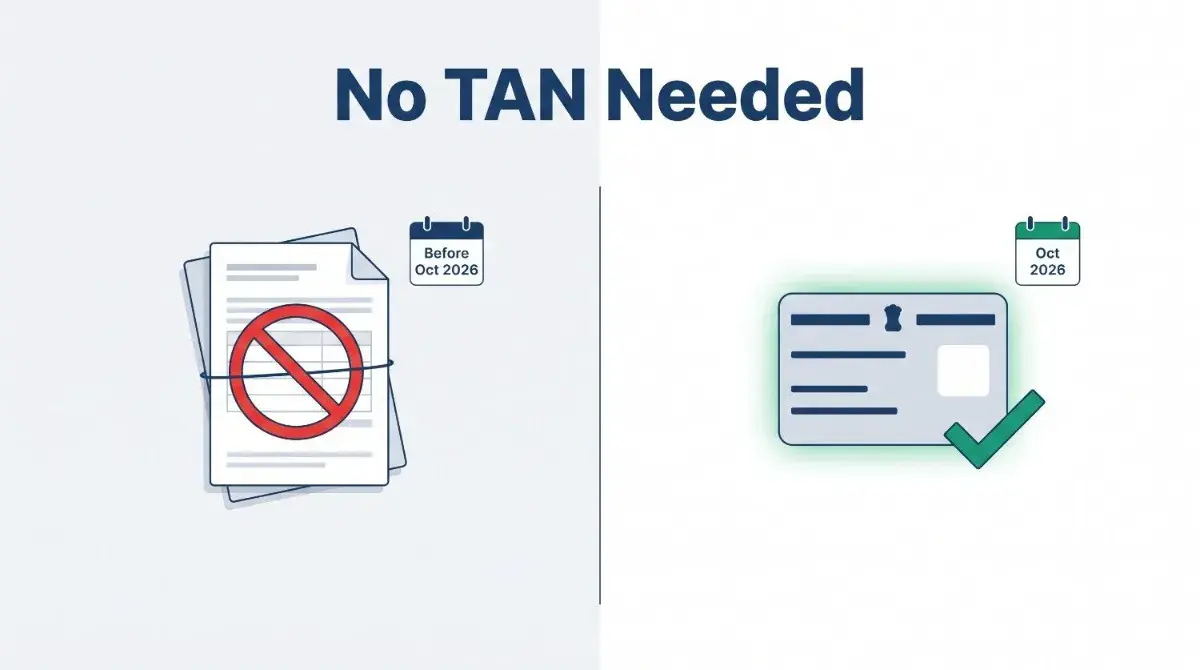
No TAN for NRI property purchase applies only from 1 October 2026, and only to resident individual and HUF buyers. Get the rates, forms, and dates you need.
Jul 25, 2026

Did you lose the SGB premature redemption tax exemption? Here's exactly who's affected, how much tax applies now, and how to check your own bonds.
Jul 24, 2026
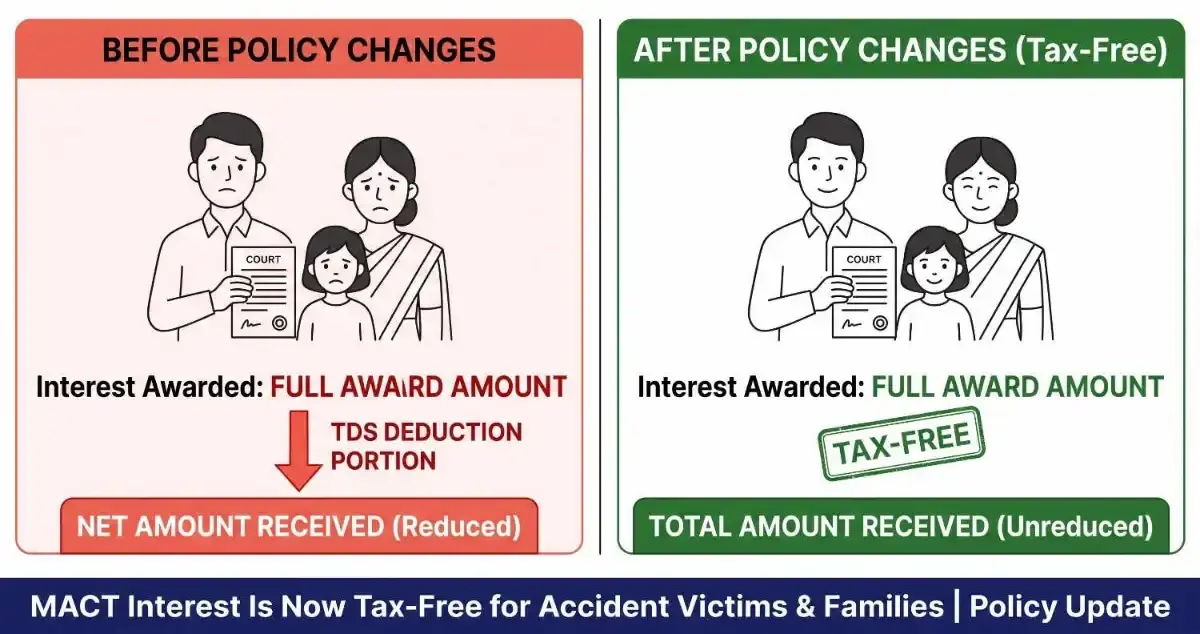
MACT interest income TDS exemption 2026 explained: who qualifies, old vs new Act rules, the FD interest trap, refund steps, and how to report it in your ITR.
Jul 24, 2026