
Marginal Relief in Income Tax (Section 87A) explained with real math: why tax on ₹12.1L is ₹10,000, not ₹61,500. Eligibility and FY 2025-26 breakeven point.
Marginal relief under Section 87A stops your tax bill from jumping by more than your income actually grew, the moment you cross ₹12 lakh in the new regime. If your taxable income is ₹12.1 lakh, you don't pay ₹61,500 in tax. You pay ₹10,000. That's the whole idea, and honestly, most explanations online get the numbers backwards.
What Is Marginal Relief Under Section 87A?
Who Does This Apply To?
Marginal Relief Rates and Limits for FY 2025-26
Worked Examples
How to Calculate Marginal Relief
What If Something Goes Wrong?
Penalties for Wrong Claims
Marginal Relief Under Section 87A vs Rebate vs Surcharge Relief
FAQ
Official Sources
Section 87A of the Income-tax Act, 1961 gives resident individuals a tax rebate if their total income stays within a set limit. Marginal relief under Section 87A is the backup mechanism that kicks in right after you cross that limit, so your tax bill doesn't fall off a cliff.
Picture it without the relief for a second. Someone earning ₹12,00,000 pays zero tax. Someone earning ₹12,10,000, just ₹10,000 more, would owe ₹61,500 in tax if the rebate vanished completely the moment they crossed the line. That's not a typo. Earning ten thousand rupees extra would cost you over sixty-one thousand in tax. Sounds unfair, doesn't it? That's exactly why marginal relief exists, to stop that cliff from happening.
The statutory text of Section 87A, under Chapter VIII (Rebates and Reliefs), lays out two separate conditions in its first proviso, one for the old regime threshold and one for the new regime. The corresponding section number under the Income-tax Act, 2025 hasn't settled into a single confirmed figure across reliable sources yet, so until the official mapping is confirmed, treat any specific new-Act number you see elsewhere with some caution. For income earned up to 31 March 2026, that is FY 2025-26, AY 2026-27, the 1961 Act numbering is what governs, and that's the basis for every calculation in this guide.
Applies to | Does NOT apply to |
|---|---|
Resident individuals (including senior and super senior citizens) under the new tax regime, income between ₹12,00,000 and ₹12,75,000 | Non-resident Indians; the rebate itself isn't available to them at all |
Resident individuals under the old regime, income between ₹5,00,000 and roughly ₹5,12,500 | HUFs, firms, and companies |
Salaried employees, freelancers, and pensioners with income taxed at slab rates | Income from short-term and long-term capital gains taxed at special rates, from FY 2025-26 onward; more on this dispute below |
One thing worth flagging here: marginal relief under Section 87A is automatic. You don't apply for it separately or tick a box somewhere. The income tax e-filing utility works it out on its own, as long as your income and regime are entered correctly.
Here's the part almost nobody bothers putting in one clean table. Five income points, computed step by step, checked against the official slab structure and verified independently rather than copied from another article. If you've seen conflicting numbers elsewhere for this same income band, this is the version worth trusting, since every figure here was recomputed from scratch rather than pulled from a competitor's table.
Total Income | Tax Before Rebate | Excess Over ₹12L | Marginal Relief | Tax Payable |
|---|---|---|---|---|
₹12,00,000 | ₹60,000 | ₹0 | ₹60,000 | ₹0 |
₹12,10,000 | ₹61,500 | ₹10,000 | ₹51,500 | ₹10,000 |
₹12,50,000 | ₹67,500 | ₹50,000 | ₹17,500 | ₹50,000 |
₹12,70,000 | ₹70,500 | ₹70,000 | ₹500 | ₹70,000 |
₹12,75,000 | ₹71,250 | ₹75,000 | ₹0 | ₹71,250 |
Look closely at ₹12,75,000. Tax computed there is ₹71,250, and the excess over ₹12L is ₹75,000. Relief only kicks in when tax exceeds the excess, and here, tax is already lower than the excess. So relief drops to zero right at this point. This is your breakeven income for marginal relief under Section 87A: anywhere from roughly ₹12,75,000 onward, you're back to paying tax purely by the slab, with no cushion left at all.
The old regime tells a different, harsher story. The ₹5,00,000 rebate threshold doesn't carry a graduated relief mechanism the way the new regime's ₹12,00,000 threshold does. Cross ₹5,00,000 by even one rupee, and you don't get partial relief. You lose the entire ₹12,500 rebate at once.
Example 1: Suresh, salaried, common case
Suresh works in Pune, earns a taxable salary of ₹12,10,000 after standard deduction, and has opted for the new regime. Here's the arithmetic, step by step, so you can check it yourself.
Tax on ₹12,10,000 under FY 2025-26 new regime slabs:
₹0 to ₹4L: nil
₹4L to ₹8L (₹4,00,000 at 5%): ₹20,000
₹8L to ₹12L (₹4,00,000 at 10%): ₹40,000
₹12L to ₹12.1L (₹10,000 at 15%): ₹1,500
Total tax before rebate: ₹61,500
Excess over ₹12,00,000: ₹12,10,000 minus ₹12,00,000, which is ₹10,000 Since tax of ₹61,500 exceeds the excess of ₹10,000, marginal relief equals ₹61,500 minus ₹10,000, which is ₹51,500 Tax payable after relief: ₹61,500 minus ₹51,500, which lands at ₹10,000
Suresh pays exactly ₹10,000 in tax before cess, not ₹61,500. That figure is precisely his excess income over ₹12 lakh. Nothing more, nothing less. That's the whole point of marginal relief.
Example 2: Priya, freelancer, edge case
Priya is a freelance designer with a taxable income of ₹12,76,000, also under the new regime. She assumes she's still inside the relief zone because she's "barely above ₹12.75 lakh." She isn't, and that small assumption costs her a lot.
Tax on ₹12,76,000:
₹0 to ₹4L: nil
₹4L to ₹8L: ₹20,000
₹8L to ₹12L: ₹40,000
₹12L to ₹12.76L (₹76,000 at 15%): ₹11,400
Total tax before rebate: ₹71,400
Excess over ₹12,00,000: ₹76,000 Since tax of ₹71,400 is less than the excess of ₹76,000, the relief condition fails. Relief equals zero. Priya pays the full ₹71,400 before cess, with no relief adjustment at all.
This is the edge case most competitor blogs skip entirely. The breakeven point isn't a round number you can eyeball casually. It sits at exactly ₹12,75,000, and a few thousand rupees on either side of that line changes your tax outcome by tens of thousands.
Four steps, done in this exact order:
Work out total tax payable on your total income at the applicable slab rates, before cess.
Calculate the excess: Total Income minus ₹12,00,000 for the new regime, or minus ₹5,00,000 for the old regime, keeping in mind there's no graduated relief beyond that old-regime point.
Compare the two figures. If tax payable is greater than the excess, marginal relief equals tax payable minus the excess.
Final tax equals tax payable minus marginal relief, which always works out to be the excess amount itself whenever relief applies.
If manual math isn't your thing, you can run your own numbers through the Section 87A Marginal Relief Calculator. Enter your income and regime, and it runs this exact sequence for you instantly.
Scenario 1: The portal shows zero relief when you expect some. Check whether you've correctly selected the new tax regime in the ITR utility. Marginal relief on the ₹12L threshold only applies under the new regime. If you're filing under the old regime instead, the ₹5L threshold and its sharp, all-or-nothing cutoff apply, with no graduated relief in between.
Scenario 2: Your income includes capital gains and the rebate gets denied. From FY 2025-26 (AY 2026-27) onward, an explicit bar applies on claiming Section 87A rebate against tax on special-rate income such as short-term and long-term capital gains. For earlier years, AY 2024-25 and AY 2025-26, the position was genuinely different. The ITAT Ahmedabad bench, in Jayshreeben Jayantibhai Palsana v. ITO (order dated 12 August 2025), ruled the rebate was available against short-term capital gains tax because the statute, as it stood that year, contained no express exclusion for that kind of income. The ITAT Indore bench reached a broadly similar conclusion around January 2026, in a case involving both short and long-term gains. Treat these as case-specific wins, not blanket guarantees; the exact citation and current status of the Indore order, along with whether any departmental circular has formally addressed this for AY 2025-26 filings, should be confirmed before you rely on it. If your claim was rejected through automated CPC processing for an earlier assessment year, rectification or an appeal citing these rulings is the documented path forward, though success isn't guaranteed since each tribunal order technically binds only that case.
Scenario 3: You miscalculated and underpaid based on relief that didn't actually apply. If you assumed marginal relief at, say, ₹12,80,000 income, past the ₹12,75,000 breakeven, and underpaid as a result, file a revised return before the relevant deadline and pay the shortfall along with applicable interest. Don't wait around for a notice to land. Voluntary correction avoids penalty proceedings down the line.
Scenario 4: Your salary increased mid-year and pushed you across the threshold without you realizing it. This happens more often than people expect, especially with annual increments or a bonus that lands in March. If your projected annual income crosses ₹12,00,000 partway through the year, your employer's TDS calculation should already account for marginal relief under Section 87A automatically, since payroll systems generally follow the same slab and relief logic. Still, it's worth checking your Form 16 projection against your own math once the increment is confirmed, rather than assuming the payroll software got it exactly right.
These three terms get blended constantly online, and they aren't the same thing at all.
The Section 87A rebate deducts tax fully if your income stays within ₹12,00,000 under the new regime, or ₹5,00,000 under the old one. Marginal relief under Section 87A, the focus of this entire article, cushions you right after you cross that limit, so the jump isn't sudden.
Surcharge marginal relief is a completely separate provision. It applies at much higher income levels, where surcharge rates step up at ₹50 lakh, ₹1 crore, ₹2 crore, and beyond, and it stops the surcharge addition from outpacing the income increase that triggered it. The mechanics are similar in spirit, but the sections and income brackets involved are entirely different. If you're earning around ₹12 lakh, surcharge marginal relief simply doesn't apply to you; surcharge itself only kicks in well above ₹50 lakh.
There's no separate penalty attached to marginal relief itself; it's a calculation mechanism, not a compliance obligation on its own. But getting the underlying tax wrong because of a miscalculation brings standard consequences with it: interest for shortfall in advance tax or delayed filing, and penalty of up to 200% of the tax on underreported income if the assessing officer treats the error as deliberate underreporting rather than an honest mistake. If you've underpaid and need to estimate the interest before filing a revised return, the Section 234A, 234B & 234C Interest Calculator can help.
It's a provision under Section 87A that limits your tax increase to no more than your income increase, once you cross the ₹12,00,000 threshold under the new regime or ₹5,00,000 under the old regime for FY 2025-26. Without it, crossing that line by even one rupee could mean owing tens of thousands more in tax.
Because marginal relief under Section 87A caps the extra tax at exactly the extra income earned. Tax computed at slab rates on ₹12.1 lakh works out to ₹61,500, but relief of ₹51,500 brings the payable amount down to just ₹10,000, matching the income gained over ₹12 lakh, rupee for rupee.
Only in a limited sense, and not the way most people assume. The old regime's ₹5,00,000 threshold has no graduated marginal relief built in. Cross ₹5,00,000 by even one rupee, and the entire ₹12,500 rebate disappears in one go.
No, and this mix-up is everywhere online. The rebate zeroes out your tax entirely if income stays within the threshold. Marginal relief is a separate, smaller cushion that applies only in the income band just above that threshold, until tax payable equals the excess income exactly.
₹12,75,000 under the new regime. At that income, tax computed by the slab, which is ₹71,250, drops below the excess over ₹12 lakh, which is ₹75,000, so the relief condition no longer holds. Below ₹12,75,000, relief still applies; from that point onward, you pay the full slab-computed tax with zero cushion.
Not from FY 2025-26 onward. An express bar excludes short-term and long-term capital gains from rebate eligibility starting AY 2026-27. For AY 2024-25 and AY 2025-26, tribunal rulings from Ahmedabad and Indore allowed the rebate against such gains, but this remains case-specific until a higher court or a formal circular settles the question for good.
₹12,00,000 for the full rebate of up to ₹60,000, with marginal relief extending practical near-zero tax outcomes up to roughly ₹12,75,000, before your tax bill reverts fully to plain slab computation.
If the assessment year is still open for rectification, or you can file a revised return before the deadline, yes, you can. Past that window, you'd need a rectification application to the assessing officer, and there's no guaranteed outcome at that stage.
Usually it comes down to rounding at the cess stage, or the order of operations. The portal applies relief before adding 4% Health and Education Cess, while a manual calculation sometimes gets that sequence flipped. Always compute marginal relief first, then apply cess on the post-relief figure.
Not really. Section 87A's rebate and marginal relief work the same way for senior citizens, aged 60 to 80, and resident individuals below that age, as long as they meet the income condition. The basic exemption limit changes by age elsewhere in the slab structure, but the marginal relief mechanism itself doesn't treat age as a factor.
Yes, as long as your total taxable income across salary, interest, rental income, or any other slab-rate source stays within the eligible band. What matters is the combined figure on your return, not which source contributed how much. Mixing in special-rate income like capital gains is where things get complicated, as covered above.
Marginal relief under Section 87A is the only reason crossing ₹12 lakh in taxable income doesn't cost you tens of thousands of rupees overnight. Run your exact numbers through the Section 87A Marginal Relief Calculator before you file, especially if your income sits anywhere between ₹12,00,000 and ₹12,75,000.
Written by Anita Patil, Tax Planner & Calculation Advisor | Last Updated: June 2026 Reviewed by Toolisky Editorial Team
For educational purposes only. Verify all figures at official sources before acting. Toolisky is not affiliated with any government body. Consult a qualified CA or legal professional before making compliance decisions. See toolisky.com/accuracy-and-limitations.
Section 87A, Income-tax Act, 1961 (Chapter VIII, Rebates and Reliefs): incometaxindia.gov.in/w/section-87a-26
Income-tax Act, 2025 vs. Income-tax Act, 1961 mapping utility: incometaxindia.gov.in/utility-to-check-provisions-of-income-tax-act-1961-vis-a-vis-income-tax-act-2025
ITAT Ahmedabad order, Jayshreeben Jayantibhai Palsana v. ITO, ITA No. 1014/Ahd/2025, dated 12 August 2025
ITAT Indore order, Kanhaiya Lal Panchal v. CIT (NFAC), January 2026
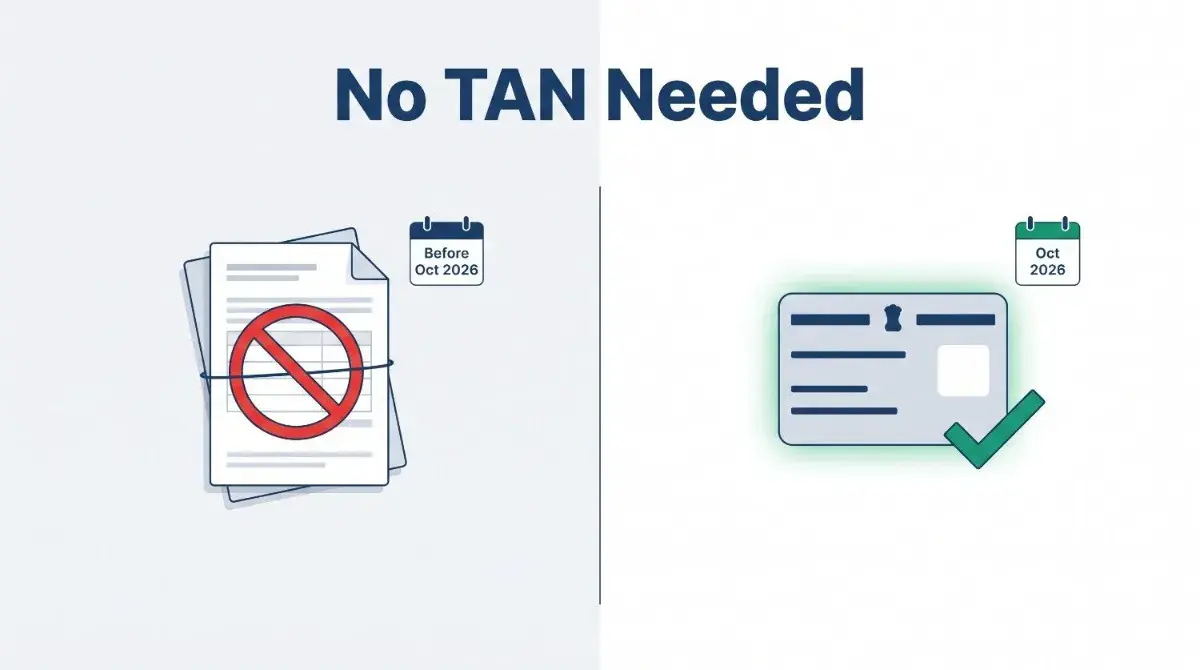
No TAN for NRI property purchase applies only from 1 October 2026, and only to resident individual and HUF buyers. Get the rates, forms, and dates you need.
Jul 25, 2026

Did you lose the SGB premature redemption tax exemption? Here's exactly who's affected, how much tax applies now, and how to check your own bonds.
Jul 24, 2026
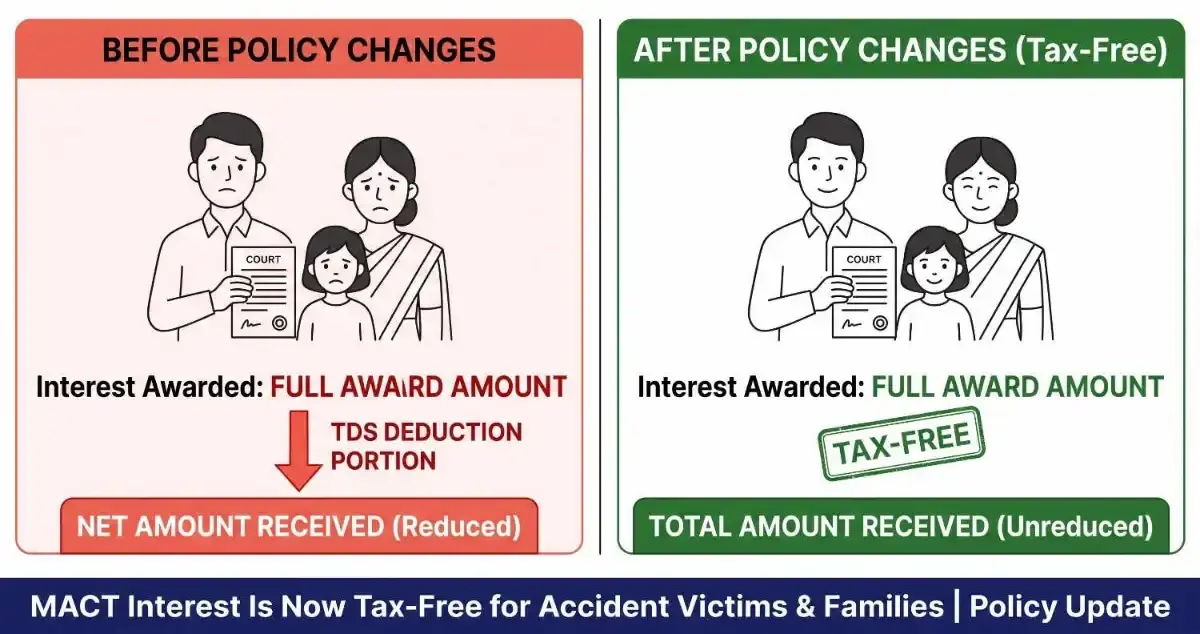
MACT interest income TDS exemption 2026 explained: who qualifies, old vs new Act rules, the FD interest trap, refund steps, and how to report it in your ITR.
Jul 24, 2026