

Section 80CCD(1B) deduction lets you claim ₹50,000 extra on NPS, over the 80C limit. Eligibility, old regime rule, ITR steps, and real ₹ savings inside.
Section 80CCD(1B) deduction lets you claim an extra ₹50,000 on your NPS contribution, on top of the ₹1.5 lakh limit under Section 80C. It's available only if you file under the old tax regime, and only for money put into your NPS Tier I account. That takes your total NPS-linked deduction to ₹2 lakh a year.
Section 80CCD(1B) is a standalone provision under the Income-tax Act, 1961, rewarding voluntary NPS savers. It gives a deduction of up to ₹50,000 on money you put into your National Pension System (NPS) Tier I account, separate from Section 80C.
You don't need to exhaust 80C first. The two run independently, that's the whole point of this section.
India moved from the Income-tax Act, 1961 to the Income-tax Act, 2025, effective 1 April 2026, and section numbers changed across the board, including this one.
For income earned up to 31 March 2026 (FY 2025-26, filed as AY 2026-27, due 31 July 2026), the old Section 80CCD(1B) under the 1961 Act governs your claim. For income earned from 1 April 2026 onward (Tax Year 2026-27), the same benefit sits under Section 124(3) of the Income Tax Act, 2025.
Filing this July for FY 2025-26? Write "80CCD(1B)", that's what the portal and Form 16 use. Planning contributions for April 2026 onward, get used to "Section 124(3)."
The deduction amount, the ₹50,000 cap, and the old-regime-only rule haven't changed. Only the label has. [Source: incometaxindia.gov.in, cross-checked with the CBDT section-mapping reference]
This isn't just for salaried employees. Freelancers, business owners, and NRIs can use it too, if they've picked the old tax regime.
Applies To | Does NOT Apply To |
|---|---|
Salaried individuals contributing to NPS Tier I | Taxpayers on the new tax regime |
Self-employed and freelance professionals with NPS Tier I | NPS Tier II contributions (one narrow exception below) |
Resident Indians and NRIs aged 18–70 with an NPS account | HUFs (this deduction is for individuals only) |
Parents/guardians contributing to a minor's NPS Vatsalya account | Employer's NPS contribution under Section 80CCD(2), a separate deduction |
Partial case: Central Government employees get a deduction for Tier II too, but under Section 80C with a 3-year lock-in, not 80CCD(1B). Private-sector Tier II gets nothing.
Here are the actual numbers for FY 2025-26 (AY 2026-27):
Rule | Detail |
|---|---|
Maximum deduction under 80CCD(1B) | ₹50,000 per financial year |
Combined limit with 80C + 80CCC + 80CCD(1) | ₹1.5 lakh (separate from 1B) |
Maximum total NPS-linked deduction | ₹2,00,000 (₹1.5L + ₹50,000) |
Eligible account | NPS Tier I only |
Regime | Old tax regime only, zero benefit under the new regime |
Age eligibility | 18 to 70 years for regular NPS |
Minors (NPS Vatsalya) | Parent/guardian can claim up to ₹50,000 aggregate for contributions to the minor's account |
[Source: Section 80CCD, incometaxindia.gov.in]
Should you switch regimes just for this ₹50,000? Here's the tax saved at each slab, with 4% cess added:
Your Tax Slab | Tax Saved on ₹50,000 Deduction |
|---|---|
5% | ₹2,500 + cess = ₹2,600 |
20% | ₹10,000 + cess = ₹10,400 |
30% | ₹15,000 + cess = ₹15,600 |
At 30%, that's ₹15,600 back yearly, for a lock-in till 60. At 5%, the ₹2,600 saving probably isn't worth losing the new regime's simplicity. Is a five-figure saving worth that trade-off for you? Run the numbers on our <a href="https://toolisky.com/old-vs-new-tax-regime-calculator" target="_blank" rel="noopener">old vs new tax regime calculator</a> first; the old regime only wins once your combined deductions cross a certain threshold.
People mix these three up constantly. Here's the difference:
Section | Who claims it | Limit | Counts toward 80C cap? |
|---|---|---|---|
80CCD(1) | Employee's own NPS contribution (10% of salary, or 20% of gross income if self-employed) | Part of the ₹1.5 lakh 80C combined limit | Yes |
80CCD(1B) | Same person's additional voluntary NPS contribution | ₹50,000, separate | No |
80CCD(2) | Employer's NPS contribution on the employee's behalf | Up to 14% of salary (Central Govt) or 10% (other employers), no rupee cap | No, and available even in the new regime |
If you're also stacking health insurance under Section 80C's cousin section, our <a href="https://toolisky.com/blog/section-80d-deduction-fy-2025-26" target="_blank" rel="noopener">Section 80D deduction guide</a> covers those limits separately.
Example 1, Common case: Priya, salaried, 30% slab
Priya earns ₹18 lakh a year. She already puts ₹1.5 lakh into 80C (PPF + ELSS), and separately contributes ₹50,000 to NPS Tier I through auto-debit.
80C deduction: ₹1,50,000
80CCD(1B) deduction: ₹50,000 (full amount, since it's ≤ ₹50,000)
Combined deduction from both sections: ₹2,00,000
Tax saved on the ₹50,000 alone: ₹50,000 × 30% = ₹15,000, plus 4% cess = ₹15,600
Example 2, Edge case: Ramesh, self-employed, partial 80C usage
Ramesh is a freelance architect earning ₹9 lakh a year. He's used only ₹80,000 of his 80C limit and contributes ₹70,000 to NPS Tier I in one go. Most guides skip this: he can split the ₹70,000 instead of dumping it all into 80C.
₹20,000 goes under 80CCD(1), taking his 80C-linked total to ₹1,00,000, leaving ₹50,000 of 80C room untouched
The remaining ₹50,000 goes under 80CCD(1B), the maximum allowed
Total NPS deduction: ₹70,000, with ₹50,000 of 80C room still free for other investments
There's no separate portal, it's done inside your regular Income Tax Return.
Log in at incometax.gov.in and open "File Income Tax Return."
Pick your form: ITR-1 for salaried income up to ₹50 lakh, ITR-2 for capital gains or foreign income, ITR-3/ITR-4 for business or professional income.
Confirm you're on the old tax regime: tick "Opting out of New Regime" in ITR-1/ITR-2, or the deduction auto-shows zero.
Go to Schedule VI-A (Deductions).
Under 80CCD(1), enter your own contribution (feeds into the 80C-linked cap).
Under the separate 80CCD(1B) row, labelled as contribution to pension scheme under section 80CCD(1B), enter your additional voluntary contribution, up to ₹50,000.
The portal asks for your PRAN; the return won't validate without it.
If your employer already reflected this in Form 16, verify the pre-filled amount against your NPS statement before submitting.
Your Form 16 doesn't show your voluntary NPS contribution. Common when you contribute via the NPS app or a POP-SP counter, not payroll. Fix: claim it yourself in Schedule VI-A, using your NPS Tier I statement as backup.
You claimed the full 80CCD(1) amount inside 80C, leaving no room for 80CCD(1B). The portal sometimes auto-fills 80CCD(1) into the combined 80C bucket. Fix: manually split it, 80CCD(1) up to 10% of salary (20% of gross income if self-employed) goes in the 80C-linked row; anything beyond, up to ₹50,000, moves to the 80CCD(1B) row.
Your return got rejected for a missing or mismatched PRAN. E-filing validation requires PRAN for both claims. Fix: log into your NPS account on the CRA portal, open the "View" menu, and pull your correct PRAN and Tier I statement before re-submitting.
<a id="documents-needed"></a>
Document | Digital Copy OK? | Where to Get It |
|---|---|---|
NPS Tier I transaction/contribution statement | Yes | CRA portal login → View → Statement of Voluntary Contribution |
PRAN card or PRAN number | Yes | NPS welcome kit or CRA portal |
Form 16 (if salaried) | Yes | Employer's payroll/HR portal |
Contribution receipt for self-deposits | Yes | POP-SP receipt or eNPS payment confirmation |
You don't attach these to your ITR (returns are annexure-less), but keep them six years in case the assessing officer asks.
There's no dedicated penalty clause for 80CCD(1B), but overclaiming has real consequences. A caught overclaim brings a demand notice adjusting your refund, plus interest under Section 234B/234C. Treated as concealment during scrutiny, penalty under Section 270A can reach 200% of the tax on under-reported income.
The ITR deadline for FY 2025-26 (AY 2026-27), ITR-1 and ITR-2, is 31/07/2026. Miss it, and you can still file belated by 31/12/2026, with a late fee up to ₹5,000 under Section 234F.
No, only under the old regime. The new regime allows just the employer's NPS contribution under Section 80CCD(2), capped at 14% of salary for most employers. Select the new regime, and the portal forces this deduction to zero.
₹50,000 a year, unchanged from earlier years, over and above the ₹1.5 lakh combined limit under Sections 80C, 80CCC, and 80CCD(1). Maximum NPS-linked deduction: ₹2 lakh.
Yes. A common misconception is that 80CCD(1B) gets swallowed by the ₹1.5 lakh 80C cap. It doesn't. Fill the full ₹1.5 lakh under 80C and separately claim up to ₹50,000 more under 80CCD(1B).
Yes, for parents or guardians contributing to a minor's NPS Vatsalya account. A proviso in the Finance Act, 2025, extends the ₹50,000 deduction to such contributions, aggregated with the parent's own NPS claim. Confirm cap-sharing with a CA before large contributions.
No, for anyone. The one exception: Central Government employees get a Tier II deduction under Section 80C instead, with a 3-year lock-in.
₹15,000 on a full ₹50,000 contribution, plus 4% cess, totalling ₹15,600. At 20% it's ₹10,400; at 5% it's ₹2,600.
File a revised return under Section 139(5) if the window hasn't closed, or check the belated/updated return timeline for that year. You can't claim a missed deduction through the current year's return.
Yes, salaried, self-employed, and eligible NRIs can all claim it. Self-employed get a higher 80CCD(1) cap (20% of gross income versus 10% of salary), but the ₹50,000 under 1B stays flat regardless of income type.
Your NPS Tier I transaction statement, downloadable from your CRA account, is the primary proof. Returns are annexure-less, so you don't attach it, but retain it with your PRAN for six years.
No. Employer contributions sit under a separate section, 80CCD(2), with no fixed rupee cap. You can claim all three simultaneously if eligible.
If you're on the old regime and haven't touched NPS yet, putting ₹50,000 into Tier I before 31 March is a simple way to cut this year's tax bill. Check the numbers on the <a href="https://toolisky.com/old-vs-new-tax-regime-calculator" target="_blank" rel="noopener">old vs new regime calculator</a>, then file at <a href="https://www.incometax.gov.in" target="_blank" rel="noopener">incometax.gov.in</a>.
For educational purposes only. Verify all figures at official sources before acting. Toolisky is not affiliated with any government body. Consult a qualified CA or legal professional before making compliance decisions. See toolisky.com/accuracy-and-limitations.
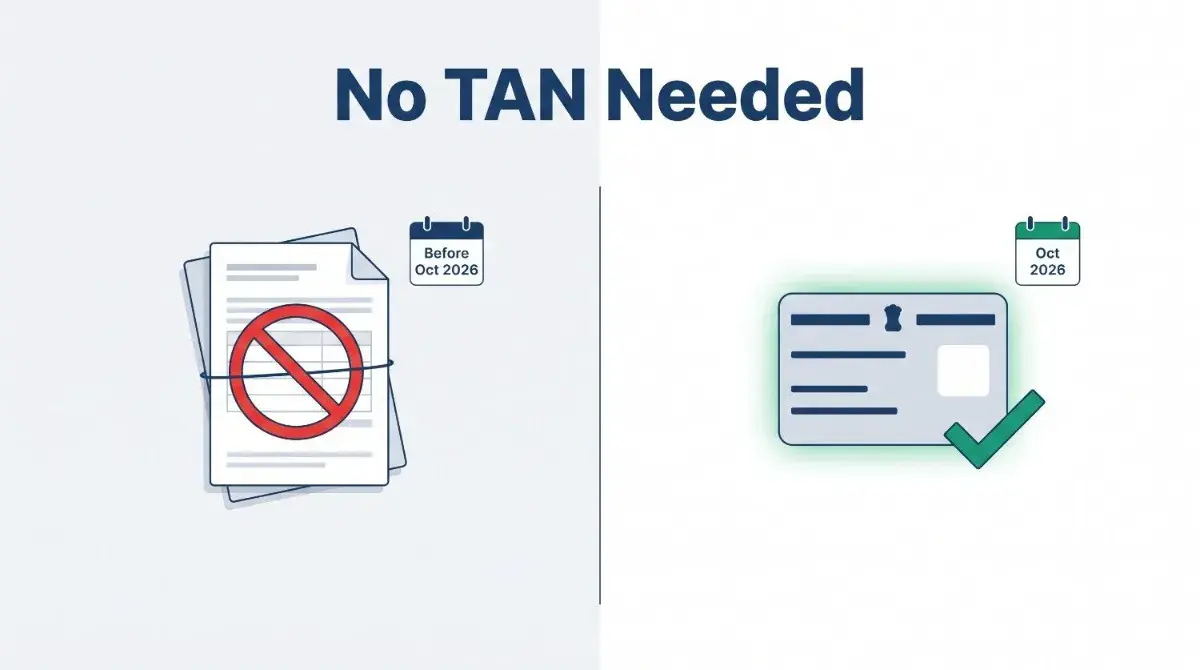
No TAN for NRI property purchase applies only from 1 October 2026, and only to resident individual and HUF buyers. Get the rates, forms, and dates you need.
Jul 25, 2026

Did you lose the SGB premature redemption tax exemption? Here's exactly who's affected, how much tax applies now, and how to check your own bonds.
Jul 24, 2026
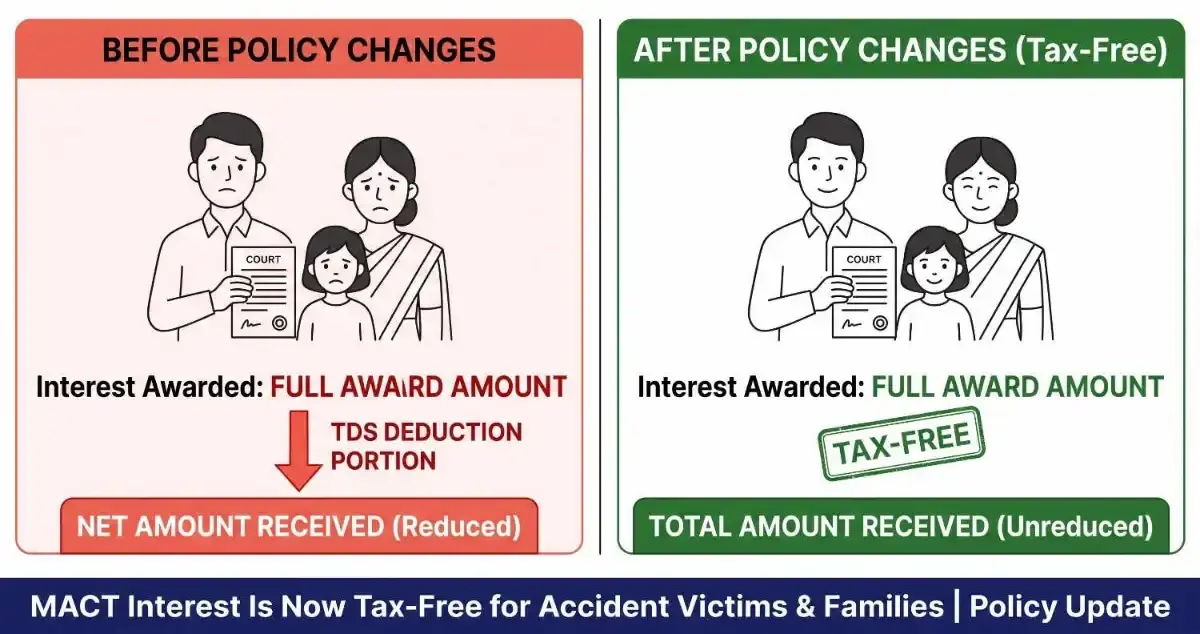
MACT interest income TDS exemption 2026 explained: who qualifies, old vs new Act rules, the FD interest trap, refund steps, and how to report it in your ITR.
Jul 24, 2026