

LTCG tax on mutual funds: current 12.5% rate, ₹1.25 lakh exemption, equity vs debt fund rules, and how the new Income Tax Act affects FY 2025-26 filing.
LTCG tax on mutual funds is what you pay when you sell equity or debt fund units you've held long enough to count as "long-term." For equity-oriented funds in FY 2025-26, that means 12.5% on gains above ₹1.25 lakh a year, with no indexation, once your units cross 12 months.
Here's the part most articles skip: which law applies matters just as much as the rate. Units sold up to 31 March 2026 (FY 2025-26, assessed in AY 2026-27) fall under the Income-tax Act, 1961 — Sections 112A, 112, and 50AA. From 1 April 2026 (what the new Act calls Tax Year 2026-27), the Income-tax Act, 2025 takes over, and Section 112A becomes Section 198, while Section 112 becomes Section 197. This mapping is confirmed on the Income Tax Department's own 1961-vs-2025 concordance utility. If you're filing your return in July 2026 for FY 2025-26, you'll still see the old section numbers on your Form 16 and the e-filing portal — the new numbers only kick in for sales made from April 2026 onward.
LTCG tax on mutual funds kicks in when you redeem units after the minimum holding period, and your profit isn't fully tax-free anymore. For equity-oriented schemes, this sits under Section 112A of the Income-tax Act, 1961 (Section 198 once the new Act applies). Debt-oriented schemes bought on or after 1 April 2023 work differently — they fall under Section 50AA, which removes long-term treatment altogether.
Two acronyms come up constantly, so let's clear them now. LTCG means Long-Term Capital Gains. STT is Securities Transaction Tax — the small tax charged when you buy or sell listed equity and equity fund units. You need proof that STT was paid to claim the lower 12.5% rate.
Applies To | Does NOT Apply To |
|---|---|
Resident individuals, HUFs, and NRIs redeeming equity, debt, hybrid, ELSS, or gold mutual fund units | Fund managers or AMCs — this is investor-level tax, not fund-level |
Anyone with mutual fund LTCG above ₹1.25 lakh in a financial year | Units switched within a scheme's own segregated portfolio for defaulted securities |
SIP investors, since every instalment is checked against its own holding period | Traders who treat units as stock-in-trade — that's taxed as business income instead |
One partial case worth flagging: NRIs pay the same LTCG rate as residents, but the fund house deducts TDS right at redemption. If too much gets deducted, you can only claim it back by filing an ITR.
Equity-oriented funds (65% or more in domestic equity), including ELSS after the 3-year lock-in: The LTCG tax rate is 12.5% on gains above ₹1,25,000 a year. You need to have held the units for more than 12 months, and there's no indexation benefit here. STT must have been paid on both the purchase and the sale. [Source: incometaxindia.gov.in]
Specified mutual funds bought on or after 1 April 2023 (Section 50AA): Every gain here is treated as short-term and taxed at your slab rate, no matter how long you hold the units. Debt funds with more than 65% of assets in debt and money-market instruments fall in this bucket, once acquired on or after 1 April 2023. The definition actually changed along the way — it originally covered funds with 35% or less in domestic equity shares, and the Finance (No. 2) Act, 2024 redefined it to the current 65%-debt test, applicable from FY 2025-26. That shift matters because it changed how gold ETFs, international fund-of-funds, and certain hybrid schemes get classified — worth double-checking your specific scheme's category before you assume anything.
Debt-oriented funds bought before 1 April 2023: These still get long-term treatment once you cross 36 months. But since the Finance (No. 2) Act, 2024, the tax rate is a flat 12.5% without indexation on any sale from 23 July 2024 onward. The 20%-with-indexation choice was reinstated only for resident individuals and HUFs selling land or building acquired before that date — it was never extended to debt mutual funds, gold, or unlisted shares, so don't expect an indexation option here even for older units.
Hybrid funds sitting between 35% and 65% equity: These usually don't count as "equity-oriented" (which needs 65%+ equity) and don't count as "specified" either (which needs 65%+ debt now). So they generally fall back on plain Section 112 treatment — LTCG after 24 months at 12.5%, no indexation. It's worth checking your fund's actual equity allocation in its scheme document, since this middle band is where classification genuinely varies fund to fund.
Here's the whole picture side by side:
Fund Type | Bought | LTCG Holding Period | LTCG Rate |
|---|---|---|---|
Equity/ELSS (65%+ equity) | Any time | Over 12 months | 12.5% above ₹1.25 lakh |
Specified/debt (65%+ debt) | On/after 1 Apr 2023 | Never — always taxed as STCG | Slab rate |
Debt fund | Before 1 Apr 2023 | Over 36 months | 12.5%, no indexation |
Hybrid (35–65% equity) | Any time | Over 24 months | 12.5%, no indexation |
Short-term capital gains on equity or ELSS units sold within 12 months are taxed at a flat 20% (Section 111A) — up from 15% before 23 July 2024. Budget 2026, presented on 1 February 2026, left both the rate and the exemption limit exactly where they were. In plain terms: the Finance Minister confirmed LTCG stays at 12.5% and the ₹1.25 lakh exemption continues into FY 2026-27 as well.
One more thing people mix up: IDCW (dividend) payouts from mutual funds have nothing to do with LTCG. They're taxed as "Income from Other Sources" at your slab rate, with 10% TDS if you earn more than ₹10,000 a year from a single AMC. Our dividend income tax calculator works this out separately if you're holding both growth and IDCW plans.
Example 1 — Priya, a salaried SIP investor. Priya has been running an equity fund SIP since 2021 and redeemed the whole thing in December 2025. Units older than 12 months show a gain of ₹3,20,000. Units bought within the last 12 months show a separate gain of ₹40,000 — since SIP units are tracked instalment by instalment using FIFO, not averaged together.
LTCG portion: ₹3,20,000 − ₹1,25,000 exemption = ₹1,95,000 taxable
LTCG tax: ₹1,95,000 × 12.5% = ₹24,375
STCG portion: ₹40,000 × 20% = ₹8,000
Add 4% cess on both: (₹24,375 + ₹8,000) × 4% = ₹1,295
Total tax payable: ₹33,670.
Example 2 — Ramesh, a mixed debt fund investor. Ramesh bought a debt fund in March 2022 (before the cutoff) and added more units in June 2023 (after it). He redeems both lots in 2026, with a combined gain of ₹6,00,000, split evenly across the two purchases.
The March 2022 lot — ₹3,00,000 gain, held over four years — qualifies as LTCG under Section 112: ₹3,00,000 × 12.5% = ₹37,500. The June 2023 lot — also ₹3,00,000 gain — is deemed STCG under Section 50AA regardless of how long it's been held, taxed at Ramesh's 30% slab: ₹3,00,000 × 30% = ₹90,000.
Same fund, same redemption date, same gain amount — yet a ₹52,500 difference in tax, purely because of the purchase date. That's exactly why tracking purchase dates lot by lot matters far more for debt funds than for equity ones.
Check the holding period from your capital gains statement, available from your AMC or registrar (CAMS or KFintech).
Classify the fund — equity-oriented, specified/debt, or hybrid — using its stated equity allocation.
Apply grandfathering if the units were bought on or before 31 January 2018. Your cost of acquisition becomes the higher of the actual purchase price or the fair market value as on 31 January 2018, capped at the sale price.
Subtract cost from sale value to get the raw gain, then take off the ₹1.25 lakh exemption if it's equity LTCG.
Apply the rate — 12.5% for equity or hybrid LTCG, slab rate for post-April-2023 debt fund gains — and add 4% cess.
The formula for equity LTCG, in one line: Tax = (Sale Value − Cost of Acquisition − ₹1,25,000) × 12.5%, plus 4% cess. Our LTCG tax calculator runs this automatically, including the FIFO ordering that SIP redemptions need.
Use the annual exemption every year. Redeem equity fund units worth up to ₹1.25 lakh in gains each March, then buy them straight back. India has no wash-sale rule, so this resets your cost basis tax-free, year after year.
Offset gains with losses. If you're sitting on a loss in one equity fund and a gain in another, sell both in the same financial year — long-term losses cancel out long-term gains rupee for rupee.
Switch to an SWP instead of one lump-sum redemption. A Systematic Withdrawal Plan spreads your gain across several financial years, so you get to reuse the ₹1.25 lakh exemption repeatedly instead of losing most of it to a single large withdrawal.
Split big redemptions across 31 March. Sell half before the financial year closes and the rest just after, so two years' worth of exemption gets used instead of one.
For reinvestment routes under Sections 54, 54EC, and 54F that can also work alongside mutual fund gains, our detailed guide on saving LTCG tax legally walks through each one.
Your capital gains statement doesn't match your AIS. Pull the exact statement from your AMC or registrar rather than estimating figures, and reconcile it line by line against the Annual Information Statement on the income tax e-filing portal before you file. Mismatches here are one of the most common triggers for an automated notice under Section 143(1).
You filed the wrong ITR form. Even ₹1 of LTCG or STCG rules out ITR-1. If you've already filed on that form, switch to ITR-2 (or ITR-3 if you also have business income) and submit a revised return before the assessment year's deadline.
You skipped the FIFO calculation on SIP redemptions. Each SIP instalment counts as a separate purchase for tax purposes. If you redeemed a lump sum and averaged the gain instead of applying FIFO, pull your registrar's transaction statement, sort by purchase date, and recompute — an averaged number will get both your LTCG and STCG wrong.
Capital gains statement from your AMC, registrar, or broker — accepted digitally, and this is your primary source for cost, sale value, and dates.
Form 26AS / AIS from the income tax portal, to cross-check TDS and reported transactions — digital only.
Fair market value proof for pre-2018 equity units, available from AMFI or exchange NAV history, if grandfathering applies.
PAN-linked demat/CAS statement, to confirm ownership and dates if your AMC statement is incomplete.
Underreporting LTCG, or misclassifying a debt fund as equity-oriented to claim the lower rate, attracts a penalty of 50% to 200% of the tax evaded under Section 270A. Missing an advance tax instalment when your LTCG liability crosses ₹10,000 for the year adds interest under Sections 234B and 234C at 1% per month. Filing your return late — the due date is 31 July 2026 for FY 2025-26, non-audit cases — costs ₹1,000 if your income is under ₹5 lakh, or ₹5,000 above that, under Section 234F. It also permanently forfeits your right to carry forward any capital loss for that year.
It's the tax on profit from selling mutual fund units held beyond the qualifying period — 12 months for equity-oriented funds, 36 months for debt funds bought before April 2023. Equity LTCG above ₹1.25 lakh a year is taxed at 12.5%; debt fund gains from post-2023 purchases are taxed at slab rate instead.
₹1.25 lakh per financial year, but this exemption only applies to equity-oriented and ELSS fund gains under Section 112A. There's no matching exemption for debt fund gains taxed under Section 50AA at slab rate.
Yes. Simply reinvesting your redemption proceeds into another mutual fund doesn't create any exemption. Only reinvestment in specified assets under Sections 54, 54EC, or 54F — property or notified bonds — qualifies, and that applies to the underlying capital gain, not to fund-to-fund switches.
Only on the gain, and only per instalment. Each SIP purchase is tracked separately with FIFO — units held over 12 months qualify for LTCG treatment, while more recent ones count as STCG at 20%, even inside one redemption request.
Harvest the ₹1.25 lakh annual exemption by redeeming and re-buying equity units every March, spread redemptions through a Systematic Withdrawal Plan, and set off long-term losses against long-term gains within the same financial year.
ITR-2, for individuals and HUFs with capital gains but no business income. Use ITR-3 if you also run a business or profession. ITR-1 can't be used once you have any LTCG or STCG, however small the amount.
Section 112A covers LTCG on listed equity shares, equity-oriented mutual funds, and ELSS after the lock-in — 12.5% above ₹1.25 lakh, no indexation. It does not apply to debt-oriented funds. Those instead fall under Section 112 (for pre-April-2023 purchases) or Section 50AA (for post-April-2023 purchases) — a mix-up that shows up a lot in older articles still quoting the outdated 10% rate.
For equity mutual fund units bought on or before 31 January 2018, your cost of acquisition is treated as the higher of the actual purchase cost or the fair market value on that date, capped at the sale price. This protects gains that had already built up before LTCG on equity returned in Budget 2018.
Yes, quite significantly. Debt or specified funds bought on or after 1 April 2023 lose long-term treatment entirely under Section 50AA — every gain is taxed at your slab rate no matter the holding period. Equity funds, by contrast, still get the 12.5% concessional rate after 12 months.
There's no way to reclassify STCG as LTCG once the sale has gone through. Going forward, check your capital gains statement before every redemption. If the mistake also led to an ITR error, file a revised return before the assessment year deadline instead of waiting for a notice to arrive.
Check your fund's equity allocation and purchase date before you redeem — that one detail decides whether you pay 12.5% or your full slab rate. Run your exact numbers through our LTCG tax calculator before filing, and if you're dealing with a sale after April 2026, cross-check the section numbers against the Income Tax Department's Act mapping utility rather than relying on memory.
For educational purposes only. Verify all figures at official sources before acting. Toolisky is not affiliated with any government body. Consult a qualified CA or legal professional before making compliance decisions. See toolisky.com/accuracy-and-limitations.
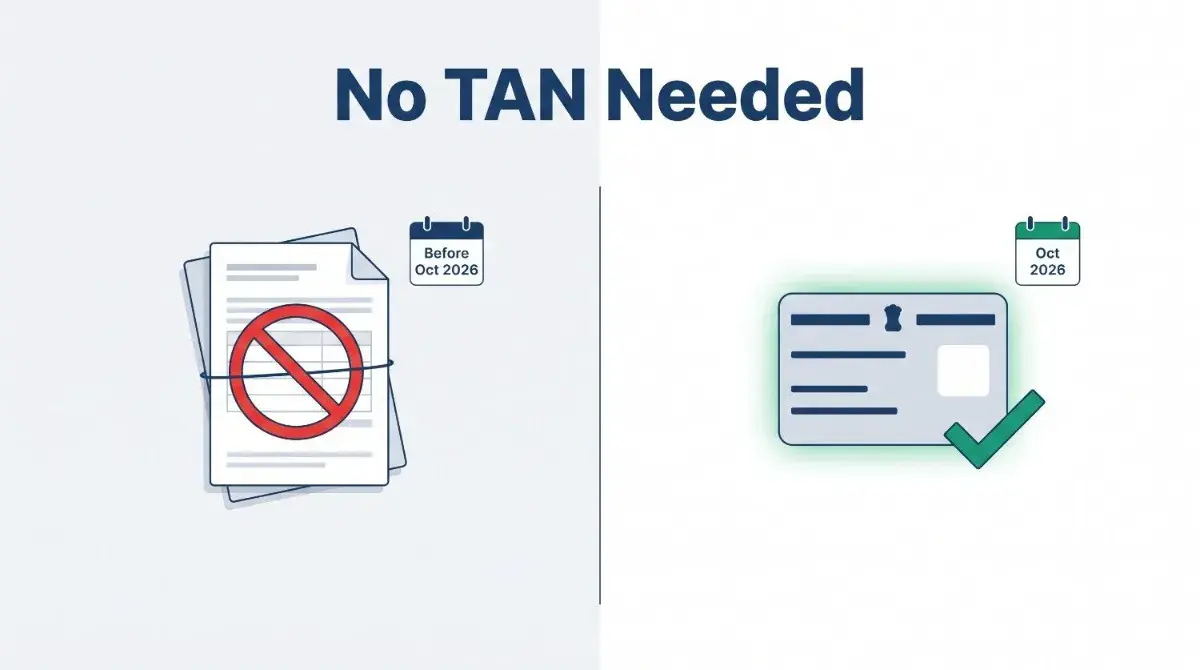
No TAN for NRI property purchase applies only from 1 October 2026, and only to resident individual and HUF buyers. Get the rates, forms, and dates you need.
Jul 25, 2026

Did you lose the SGB premature redemption tax exemption? Here's exactly who's affected, how much tax applies now, and how to check your own bonds.
Jul 24, 2026
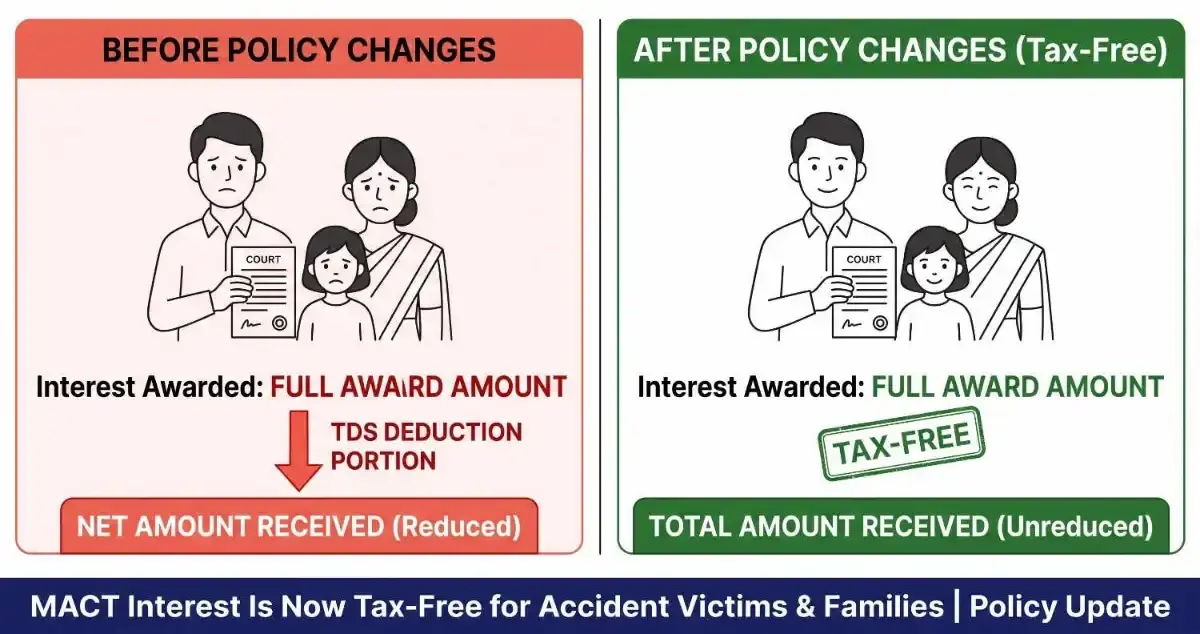
MACT interest income TDS exemption 2026 explained: who qualifies, old vs new Act rules, the FD interest trap, refund steps, and how to report it in your ITR.
Jul 24, 2026