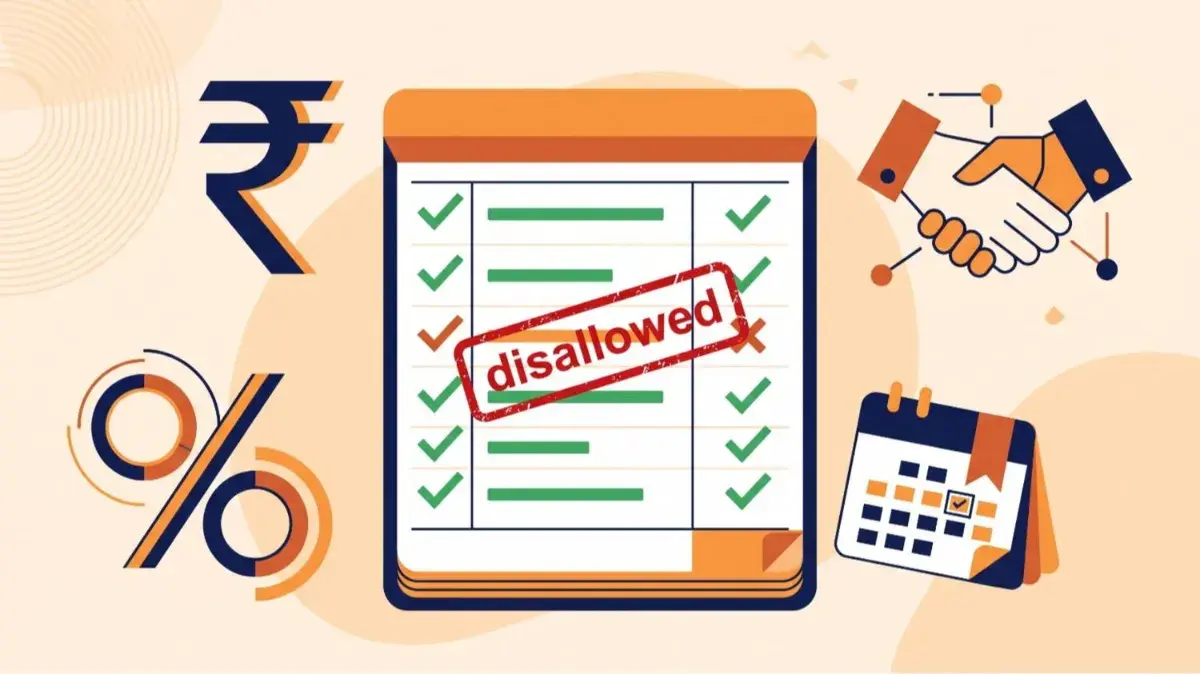

Section 40 of the Income Tax Act explains disallowed business expenses, TDS defaults, Section 40(b) partner remuneration limits, and 2025 Act changes.
Section 40 of the Income Tax Act, 1961 lists the business expenses your firm cannot deduct — even if you actually paid them — mainly because of TDS defaults, excess partner remuneration, or unpaid statutory dues. Get this wrong and your "profit" on paper jumps overnight, along with your tax bill.
Section 40 sits in Chapter IV of the Income-tax Act, 1961 and overrides Sections 30 to 38. It disallows specific expenses while computing "Profits and Gains of Business or Profession" (PGBP), no matter how genuine the expense was.
This topic falls under the Income-tax Act, 1961, since it governs income earned up to FY 2025-26 (assessed in AY 2026-27). From Tax Year 2026-27 onward, the same rule moves to Section 35 of the Income-tax Act, 2025 ("Amounts not deductible in certain circumstances"), verified against the Income Tax Department's official 1961-vis-à-vis-2025 mapping utility. Numbers below are 1961 Act numbers unless stated otherwise.
Why does this section exist? Simple — it stops businesses from inflating expenses to dodge TDS or shift taxable profit into partners' hands tax-free.
Applies To | Does NOT Apply To |
|---|---|
Any business or professional assessee claiming expenses under PGBP | Salaried individuals with no business income |
Partnership firms and LLPs paying partner remuneration/interest | Companies (Section 40(b) is firm-specific; companies follow other provisions) |
MSMEs, freelancers, and traders making payments liable for TDS | Individuals filing only ITR-1 with salary and interest income |
Associations of persons (AOPs) and bodies of individuals (BOIs) paying members | Charitable trusts assessed under Sections 11-13 |
Note: A sole proprietor filing ITR-3 or ITR-4 with business income is covered under clause (a) — the 40(b) remuneration clause only fires if you're a firm.
Confused about which sub-section hits you? You're not alone — even CA articles online mix these up. Here's the table that actually separates them out.
Section | Covers | Who It Hits | Disallowance |
|---|---|---|---|
40(a)(i) | Payments to non-residents/outside India without TDS | Any assessee | 100% of the sum |
40(a)(ia) | Payments to residents (rent, commission, contract, professional fees) without TDS | Any assessee | 30% of the sum |
40(a)(ii) | Income tax, cess (per CBDT Circular clarification), surcharge paid | Any assessee | 100% of the amount |
40(a)(ib) | Equalisation levy not deducted/paid | Any assessee | 100% of the consideration |
40A | Unreasonable payments to relatives (40A(2)), cash payments over ₹10,000/day (40A(3)), gratuity provisions | Any assessee | Excess amount, or full cash payment |
40(b) | Partner salary, bonus, commission, interest beyond deed terms or statutory cap | Partnership firms only | Excess over the book-profit limit |
40(ba) | Payments by AOP/BOI to its own members | AOPs/BOIs | Full amount paid |
Partner remuneration limit (Section 40(b), post Finance Act 2024 revision, effective 1-4-2025):
Book Profit Slab | Maximum Deductible Remuneration |
|---|---|
On the first ₹6,00,000 of book profit (or in case of a loss) | ₹3,00,000 or 90% of book profit, whichever is higher |
On the balance book profit above ₹6,00,000 | 60% of the balance |
Interest to partners: capped at 12% simple interest per annum on capital, even if the partnership deed allows more. Anything above 12% is disallowed outright.
TDS default disallowance:
Payment to non-resident, no TDS deducted → 100% disallowed under 40(a)(i)
Payment to resident, no TDS deducted → 30% disallowed under 40(a)(ia)
Deducted late but paid before the ITR due date → allowed in that same year
Deducted and paid in a later year → allowed only in the year of actual payment
Cash payment limit (Section 40A(3)): any single business payment above ₹10,000 in cash to one person in one day (₹35,000 for hiring, leasing, or plying goods-carriage vehicles) is fully disallowed — not just the excess over the limit, the entire amount. These limits haven't moved in the recent Finance Acts and stay the same for FY 2025-26.
A few payments escape this rule under Rule 6DD — payments to government bodies like Railways, payments to farmers or producers of agricultural/forest produce, and payments made in villages with no banking facility. Don't assume your case qualifies without checking the rule text; the exceptions are narrow.
Numbers make more sense than definitions, so let's run two real scenarios.
Suresh & Co. shows a net profit of ₹9,00,000 in its P&L, after already deducting ₹4,50,000 paid as partner remuneration.
Step 1 — Recompute book profit: ₹9,00,000 + ₹4,50,000 (remuneration added back) = ₹13,50,000 book profit.
Step 2 — Apply the slab:
First ₹6,00,000 → higher of ₹3,00,000 or 90% × ₹6,00,000 (₹5,40,000) = ₹5,40,000
Balance ₹7,50,000 (₹13,50,000 − ₹6,00,000) × 60% = ₹4,50,000
Maximum allowable remuneration = ₹5,40,000 + ₹4,50,000 = ₹9,90,000
Since the firm paid only ₹4,50,000, the entire amount is allowed — no disallowance here. Suresh's firm is safely under the cap.
Priya runs a partnership manufacturing unit. Book profit before remuneration is ₹20,00,000. The deed authorises ₹12,00,000 in total partner remuneration. Separately, the firm paid a contractor ₹3,00,000 without deducting TDS under Section 194C, and also paid ₹15,000 in cash to a supplier for raw material on one single day.
Remuneration cap check:
First ₹6,00,000 → 90% × ₹6,00,000 = ₹5,40,000
Balance ₹14,00,000 × 60% = ₹8,40,000
Max allowed = ₹13,80,000
₹12,00,000 is within the ₹13,80,000 cap — fully allowed, no issue there.
TDS default (40(a)(ia)): 30% of ₹3,00,000 = ₹90,000 disallowed and added back to income.
Cash payment (40A(3)): the entire ₹15,000 paid in cash exceeds the ₹10,000/day limit, so ₹15,000 is fully disallowed, not just the excess.
Total disallowance for Priya's firm: ₹90,000 + ₹15,000 = ₹1,05,000 added back to taxable profit, even though every rupee was a real business expense.
Start with net profit as per the profit and loss account.
Add back remuneration, interest, or any Section 40 item already debited to P&L.
This gives you "book profit" for Section 40(b) purposes.
Apply the ₹3,00,000/90%/60% slab to find maximum allowable remuneration.
Compare with actual remuneration paid — disallow the excess, if any.
Separately check every payment for TDS compliance — apply 30% or 100% disallowance as applicable.
Add all disallowances back to arrive at taxable business income.
Section 194T (effective 1 April 2025) requires firms to deduct 10% TDS on partner payments — salary, commission, bonus, or interest — once the aggregate crosses ₹20,000 in a financial year. This landed in the same Finance Act, 2024 that revised the 40(b) remuneration slab, and that's exactly why the two provisions now step on each other's toes.
Here's the mismatch readers keep hitting: 194T taxes remuneration at the point of credit or payment, whichever is earlier — but Section 40(b) only knows the final allowable figure after year-end book-profit computation. If a firm deducts TDS on the full authorised amount under the deed, but the year-end 40(b) cap turns out lower, the partner's Form 26AS/AIS shows TDS on income the firm never actually got to claim as a deduction. That's a genuine AIS mismatch, and it needs manual reconciliation in the ITR, not a wait-and-watch approach.
[VERIFY: whether CBDT has issued a specific circular reconciling 194T TDS credit against a lower 40(b) disallowed amount — check cbdt.gov.in circulars]
Courts have repeatedly narrowed how aggressively the tax department can apply Section 40A(2) (payments to relatives). Tribunals have generally held that the assessing officer must show the payment was actually excessive or unreasonable compared to fair market value — a bare suspicion isn't enough. On "working partner," multiple ITAT rulings confirm that active involvement in day-to-day operations, not just capital contribution, is what qualifies someone for the higher remuneration cap under 40(b). These are pattern-level takeaways from published tribunal decisions; always check the specific ruling before relying on it for your case.
Mistakes happen — deadlines slip, deeds go unsigned, forms don't match up. Here's how to actually fix the three most common ones.
1. You forgot to deduct TDS before year-end. Deduct and deposit it now, along with interest under Section 201(1A) (1% per month for non-deduction, 1.5% for late deposit). The expense becomes allowable in the year you actually pay the TDS, not retroactively.
2. Your partnership deed doesn't authorise the remuneration you're paying. File a supplementary or revised deed before the financial year ends. Remuneration paid under an unauthorised deed is 100% disallowed — there's no partial credit.
3. Form 26AS shows 194T TDS but your 40(b) computation is lower. Reconcile manually in Schedule TDS of the ITR — report only the deductible remuneration as income to the partner, and claim the TDS credit against total tax liability, not just against remuneration income.
Signed and dated partnership deed (original + any supplementary deeds)
Profit and loss account showing remuneration/interest debited
TDS challans and Form 26Q/24Q proof of deposit
Form 26AS/AIS statement for cross-verification
Books of account under Section 44AA, if turnover crosses the audit threshold
Digital copies are accepted for ITR filing, but keep signed physical deeds — assessing officers frequently ask for the original during scrutiny.
Disallowed expense under Section 40: added straight to taxable income, taxed at the applicable slab or 30% flat rate for firms.
TDS non-deduction: interest at 1% per month under Section 201(1A); 1.5% per month for late deposit after deduction.
Under-reporting of income because of a wrongly claimed disallowed expense: penalty of 50% of tax on under-reported income under Section 270A; 200% if it's treated as misreporting.
Late TDS return filing: ₹200 per day under Section 234E, capped at the TDS amount.
Is Section 40 the same as Section 40A? No. Section 40 covers TDS defaults, statutory dues, and partner remuneration limits. Section 40A is a separate, wider provision covering payments to relatives at unreasonable rates and cash payments above ₹10,000 per day. They're numbered close together but apply to different situations entirely.
Can I claim the disallowed TDS amount later? Yes. Once you deduct and deposit the TDS — even in a later year — the expense becomes allowable in that later year. You don't lose the deduction permanently; you just delay it.
What happens if a partner is not a working partner? Any remuneration paid to a non-working partner is 100% disallowed under Section 40(b)(i), regardless of the amount or what the deed says. Only working partners qualify for the book-profit-based limit.
Does the 12% interest cap apply per partner or in total? It applies per partner, on their capital account balance. Each partner's interest is checked individually against the 12% simple interest ceiling; excess for one partner doesn't offset a shortfall for another.
I missed deducting TDS last year — can I still fix it? Yes. Deduct and deposit the TDS now with applicable interest. The expense gets allowed as a deduction in the financial year you actually deposit it, so you recover the tax benefit, just a year later than planned.
Is Section 40(b) applicable to LLPs? Yes, LLPs are treated the same as partnership firms for Section 40(b) purposes — the same book-profit slab and 12% interest cap apply to designated partners.
What is "book profit" under Section 40(b)? It's your net profit as per the P&L account, computed under normal business income rules, plus any partner remuneration already debited to that P&L. You add remuneration back before applying the slab.
Will Section 40 numbering change for my FY 2025-26 return? No. Your FY 2025-26 income is assessed in AY 2026-27 under the Income-tax Act, 1961, so you still cite Section 40, 40A, and 40(b) as usual. The Section 35 (2025 Act) numbering applies only from Tax Year 2026-27 onward.
Does cash payment disallowance under 40A(3) apply to remuneration too? No. Section 40A(3) applies to payments for goods, services, or expenditure — not to partner remuneration, which is governed separately by 40(b). But if the firm pays a vendor in cash above the limit, that's disallowed under 40A(3) regardless of who the recipient is.
Can a firm deduct interest paid to a partner above 12%? No. Anything above 12% simple interest per annum is disallowed outright, even if your partnership deed explicitly permits a higher rate. The statutory cap always overrides the deed.
Run your firm's actual book profit through the Section 40(b) Partner Remuneration Calculator to check your exact allowable limit before you finalise this year's accounts. If TDS compliance is the worry, cross-check thresholds with the Section 194T TDS Threshold Calculator, and if you've already missed a deadline, the Section 234A/234B/234C interest guide walks through exactly how much interest you'll owe. For the official Section 40 text, see incometaxindia.gov.in.
For educational purposes only. Verify all figures at official sources before acting. Toolisky is not affiliated with any government body. Consult a qualified CA or legal professional before making compliance decisions. See toolisky.com/accuracy-and-limitations.
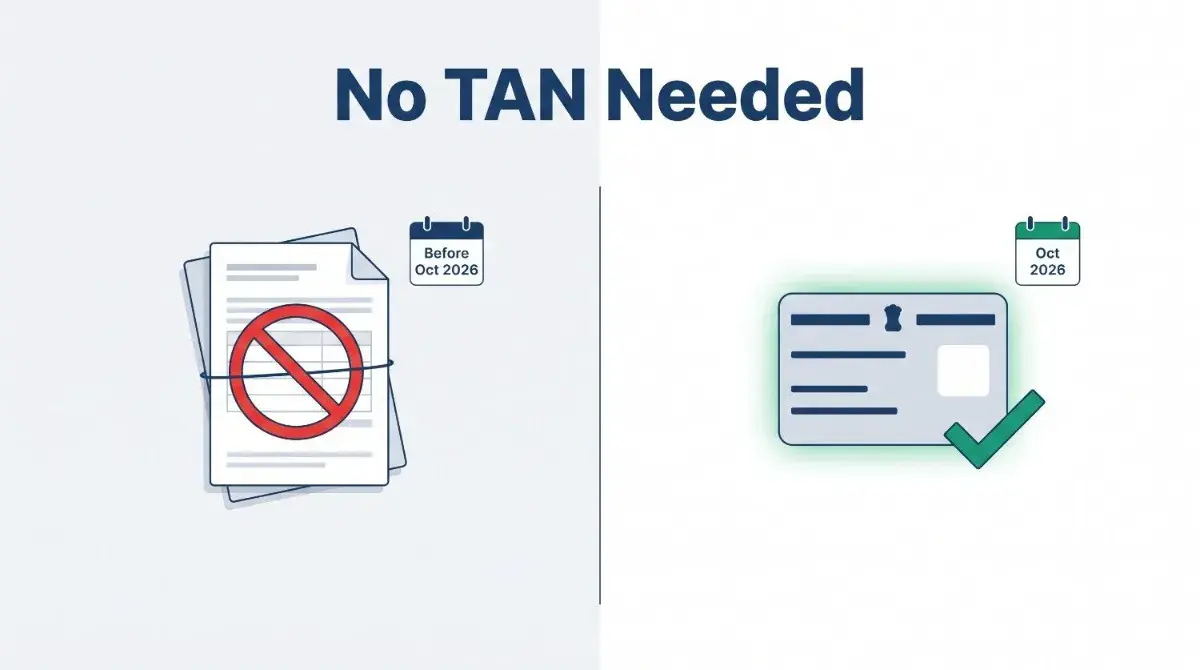
No TAN for NRI property purchase applies only from 1 October 2026, and only to resident individual and HUF buyers. Get the rates, forms, and dates you need.
Jul 25, 2026

Did you lose the SGB premature redemption tax exemption? Here's exactly who's affected, how much tax applies now, and how to check your own bonds.
Jul 24, 2026
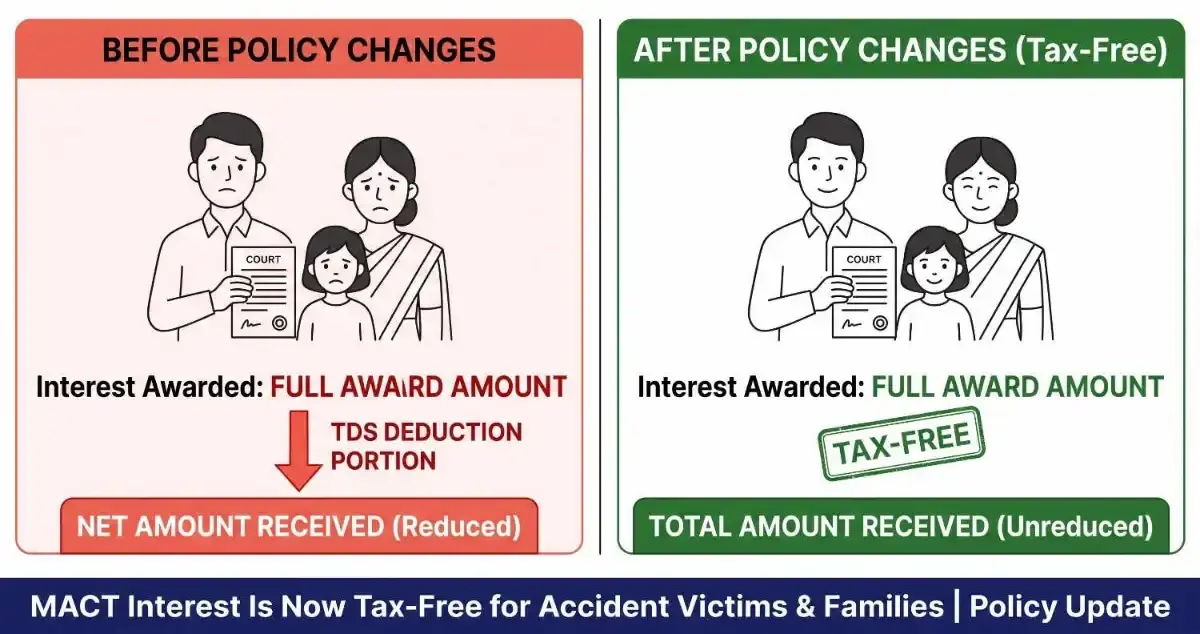
MACT interest income TDS exemption 2026 explained: who qualifies, old vs new Act rules, the FD interest trap, refund steps, and how to report it in your ITR.
Jul 24, 2026