
Share buyback tax rules 2026 explained: the new capital gains regime, LTCG and STCG rates, promoter tax, TDS rules, and how to report gains in your ITR.
From 1 April 2026, buyback proceeds are taxed as capital gains, not dividends. You pay tax only on your actual profit: buyback price minus what you paid for the shares, at 12.5% (long-term) or 20% (short-term), with promoters paying more.
A share buyback happens when a company buys back its own shares from you, usually at a premium, and then cancels them. That much hasn't changed. What keeps changing is how the taxman treats the money you get. 2026 brings the third rulebook in three years, and it's a much simpler one for most investors.
Here's the part every recent guide on the capital gains tax on buyback of shares in India needs to get right first: which law actually applies. This topic falls under the Income-tax Act, 2025, for buybacks paid on or after 1 April 2026 (Tax Year 2026-27 onward). The governing provision is Section 69 of the Income-tax Act, 2025, which taxes the gap between your cost of acquisition and the buyback money you receive, as a capital gain. This has been checked against the Income Tax Department's own clarification on the Finance Act 2026 amendments, not pulled from memory.
Buybacks paid between 1 October 2024 and 31 March 2026 stay governed by the older Income-tax Act, 1961 (the deemed-dividend rule under Section 2(22)(f), read with old Section 46A). If you're weighing the buyback tax old rules vs new rules for two separate transactions, don't mix up the section numbers between the two Acts.
Not every share you sell back to a company falls under these 2026 rules. Here's the quick check.
Applies To | Does NOT Apply To |
|---|---|
Shareholders (resident and NRI) receiving payment on or after 1 April 2026 | Buybacks paid before 1 April 2026 (deemed-dividend rules apply instead) |
Retail investors holding listed equity | Companies themselves; the tax burden has fully shifted to shareholders |
Promoters under SEBI Buy-back Regulations, Companies Act 2013, or 10%+ holders | Sale of shares on the open market (a normal capital gains transaction) |
ESOP holders whose shares get tendered in a buyback | Bonus shares or rights issues (different tax treatment) |
Unlisted company shareholders, including startup founders and employees | — |
Partial case: if a buyback straddles the cutoff, say announced in March but paid in April, it's the date of payment that decides which regime applies, not the announcement date.
Most guides stop at "old vs new." India has actually run three buyback tax regimes since 2013, and knowing which one applied matters when you're comparing past and future buybacks. The Budget 2026 buyback tax changes are what brought us to the current, third regime.
Regime | Period | Who Paid | How Taxed |
|---|---|---|---|
Regime 1 | Up to 30 Sept 2024 | Company | Flat 20% company-level tax under old Section 115QA; shareholders got proceeds tax-free |
Regime 2 | 1 Oct 2024 to 31 Mar 2026 | Shareholder | Entire proceeds taxed as deemed dividend at slab rate; cost of acquisition became a separate capital loss, not a deduction |
Regime 3 | From 1 Apr 2026 | Shareholder | Only the actual gain taxed as capital gains under Section 69, ITA 2025 |
[Source: Vinod Kothari Consultants' analysis of Finance Act 2026]
Rates under Regime 3 (from 1 April 2026):
Shareholder Type | Holding Period | Rate |
|---|---|---|
Non-promoter, listed shares | Over 12 months (LTCG) | 12.5%, after ₹1.25 lakh annual exemption |
Non-promoter, listed shares | 12 months or less (STCG) | 20% |
Non-promoter, unlisted shares | Over 24 months (LTCG) | 12.5%/20% indexation choice |
Corporate promoter | Any holding period | Effective ~22% |
Non-corporate promoter (individual, HUF, partnership) | Any holding period | Effective ~30% |
[Source: Income Tax Department clarification on Section 69, cited via TaxGuru's Finance Act 2026 summary]
So who actually counts as a "promoter" for this extra promoter tax on buyback of shares? The definition borrows from SEBI's Buy-back of Securities Regulations for listed companies, the Companies Act, 2013, or simply anyone holding more than 10% of the company, directly or indirectly. That 10% test catches early startup investors who'd never think of themselves as promoters at all. It's worth checking before you assume the lower retail rate applies to you.
One point that took the government a few months to settle: the 12% surcharge on promoter buyback gains applies only to the additional promoter tax, not your entire capital gains bill. The Income Tax Department confirmed this directly after early readings of the Finance Bill caused confusion among tax practitioners.
TDS is a genuine grey area right now. Some tax advisers say a flat 10%/20% TDS (resident/non-resident) still applies under the new regime. Others say resident shareholders now follow standard capital-gains TDS rules, which usually means the company deducts no TDS at all, while non-residents stay under Section 195. [VERIFY: exact TDS treatment for resident shareholders under Section 69 buyback payments, source: incometaxindia.gov.in TDS circulars]. Once your payment lands, check your Form 26AS or AIS (soon renamed Form 168) rather than assuming either way.
A relevant ruling: on 7 April 2026, the Delhi High Court held in PCIT v. Globe Capital Market Ltd. (ITA 364/2024) that a buyback is a capital reduction, not an acquisition of property. This means companies can't be taxed under Section 56(2)(x) for buying shares below fair market value. It protects the company side of the deal; it doesn't change what you owe on your gain.
Suresh bought 200 shares of a listed company in March 2020 at ₹180 each: total cost ₹36,000. He tenders all 200 shares in a buyback priced at ₹250, with payment landing on 15 May 2026.
Buyback proceeds: 200 × ₹250 = ₹50,000
Cost of acquisition: ₹36,000
Capital gain: ₹14,000
Holding period: over 12 months, so LTCG
Annual LTCG exemption of ₹1.25 lakh comfortably covers this gain. Tax payable: ₹0 (assuming no other equity LTCG that year)
Farida is a senior engineer at an unlisted Series B startup. She exercised 1,000 ESOP shares at ₹15/share in 2023, when fair market value (FMV) at exercise was ₹280/share. She already paid perquisite tax on the ₹265/share spread that year, added to her salary income.
In June 2026, her startup runs a buyback at ₹450/share.
Cost of acquisition for buyback purposes is the FMV at exercise, not the original strike price. Most competitor articles skip this rule entirely.
Buyback proceeds: 1,000 × ₹450 = ₹4,50,000
Cost of acquisition: 1,000 × ₹280 = ₹2,80,000
Capital gain: ₹1,70,000
Holding period from exercise (2023) to buyback (2026): over 24 months, so LTCG on unlisted shares
Tax at 12.5%: ₹21,250, plus applicable cess
Farida holds well under 10% of the company, so she isn't a promoter. The standard 12.5% rate applies, not the 22%/30% promoter rate.
Formula: Capital Gain = Buyback Consideration Received − Cost of Acquisition
Confirm your payment date. Before 1 April 2026 means the old deemed-dividend rules apply instead, a completely different calculation.
Identify cost of acquisition: purchase price for regular shares, FMV at exercise date for ESOP shares.
Calculate the holding period to the payment date. Over 12 months on listed shares is LTCG; 12 months or less is STCG.
Apply the rate: 12.5% for LTCG (after the ₹1.25 lakh exemption on listed shares), 20% for STCG.
Promoters add the surcharge to reach the ~22%/30% effective rate.
Add applicable cess and surcharge based on your total income slab.
Run these numbers through the LTCG Tax Calculator for the base math, or the Short-Term Capital Gains Tax Calculator if your holding period is under 12 months. Neither has a dedicated promoter-tax toggle yet, so add that layer manually.
Scenario 1: You reported buyback gains under the wrong ITR schedule. If you mistakenly reported 2026 buyback proceeds as "Income from Other Sources" instead of Schedule CG, file a revised return before the deadline. Pull your buyback registrar statement for the ISIN-level detail Schedule CG needs.
Scenario 2: TDS in your AIS doesn't match what you expected. Since TDS treatment on resident buyback payments is still settling, cross-check Form 26AS/168 against the registrar's payment advice. Raise a mismatch with the registrar, usually Link Intime or KFin Technologies for listed buybacks, before you file.
Scenario 3: You're unsure if you count as a promoter. Check your shareholding as of the record date, including holdings by relatives and connected entities, since the 10% threshold is often calculated on a combined basis. Get this confirmed by a CA if you're near the line. Misclassifying yourself can trigger a demand notice with interest under Section 398.
Getting your buyback tax filing wrong carries real ₹ costs:
Under-reporting capital gains: penalty up to 200% of tax evaded under misreporting provisions if an assessing officer finds the gain was deliberately understated.
Missed advance tax on a large gain: interest of roughly 1% per month on the shortfall from the due installment date.
Late ITR filing: standard late fee, plus loss of your right to carry forward any capital loss from the same transaction.
Unresolved TDS mismatch leading to a demand notice: interest at 1% per month on the disputed amount under Section 398 of the Income-tax Act, 2025.
For payment codes, deposit deadlines, and the correction process if a mismatch occurs, see the TDS Rate Chart FY 2026-27.
Yes. For payments received on or after 1 April 2026, only your actual profit (buyback price minus cost of acquisition) is taxed as capital gains, at 12.5% for LTCG or 20% for STCG, depending on how long you held the shares.
Only the profit, under the 2026 rules. This is the single biggest change from the October 2024 to March 2026 regime, where the entire amount was taxed as deemed dividend at slab rates, with no deduction allowed for what you originally paid.
Under the 2024 deemed-dividend regime, your full buyback proceeds were taxed as dividend income at slab rates, and your cost became a separate capital loss you could carry forward. From 2026, only the actual gain is taxed, at flat capital gains rates of 12.5% or 20%. That's the core difference people mean when they ask about buyback tax old rules vs new rules.
Anyone classified as a promoter under the SEBI Buy-back of Securities Regulations or the Companies Act, 2013, or anyone holding more than 10% shareholding directly or indirectly, whether or not they'd personally call themselves a promoter.
Roughly 22% for corporate promoters and 30% for non-corporate promoters, once the additional promoter tax gets layered on top of the base capital gains rate.
Use the fair market value on the date you exercised the option, not the original strike price. The strike-to-FMV spread was already taxed as a salary perquisite when you exercised, so only the further gain from FMV to the buyback price gets taxed here.
ITR-2 if you have salary plus capital gains, or ITR-3 if you also have business income. Report it under Schedule CG, in the equity LTCG or STCG heads depending on your holding period.
File a revised return before the applicable deadline, and move the entry from "Income from Other Sources" to Schedule CG. Keep your buyback registrar statement handy to back up the corrected gain figure.
This part is genuinely unsettled. Some guidance says standard capital gains TDS rules apply, which usually means residents see no TDS at all, while non-residents stay under Section 195. Check Form 26AS or Form 168 against your actual payment rather than assuming.
Possibly, depending on whether the relevant treaty has a favourable capital gains article. NRIs should check the applicable DTAA and file Form 10F along with a valid Tax Residency Certificate to claim any benefit. The domestic capital gains rate applies by default if you don't. See our DTAA guide for the filing steps.
Mostly yes, with two differences. Unlisted shares need a 24-month holding period for LTCG instead of 12 months, and there's no ₹1.25 lakh exemption the way there is for listed equity. Startup founders and ESOP holders should also double-check the 10% promoter threshold, since it's easy to cross without realising it.
If you've tendered shares in a 2026 buyback, pull your contract note and confirm your exact cost of acquisition today, don't wait for ITR season. Run the numbers through the LTCG Tax Calculator, and cross-check current section numbers directly at incometaxindia.gov.in before you file.
For educational purposes only. Verify all figures at official sources before acting. Toolisky is not affiliated with any government body. Consult a qualified CA or legal professional before making compliance decisions. See toolisky.com/accuracy-and-limitations.
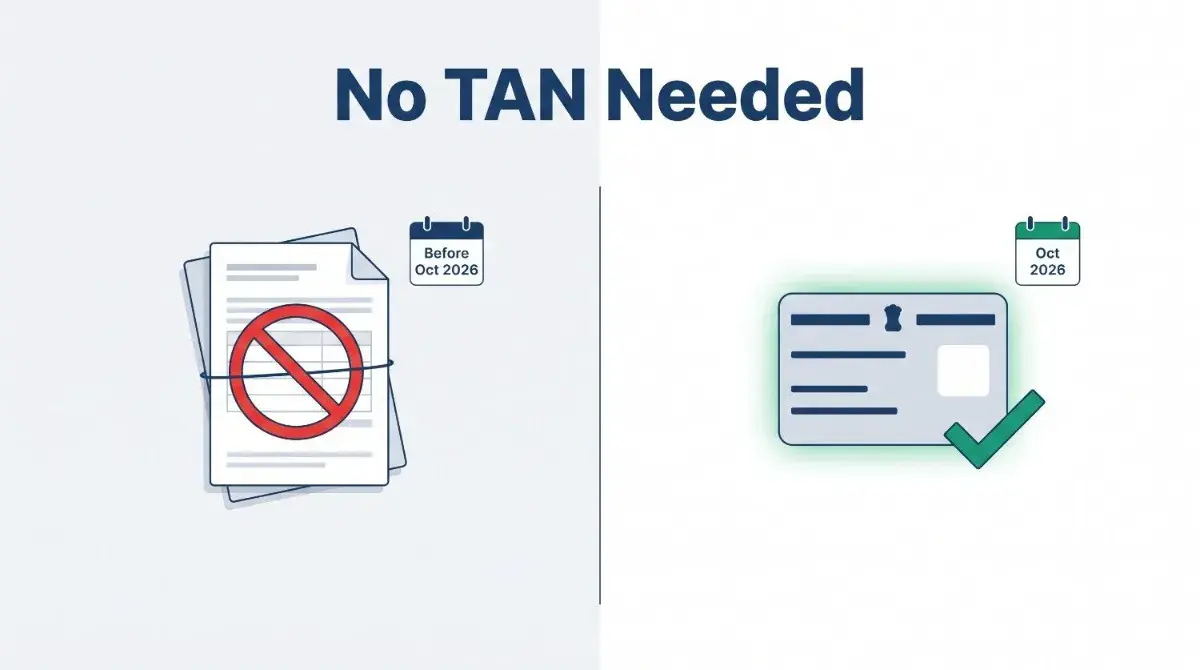
No TAN for NRI property purchase applies only from 1 October 2026, and only to resident individual and HUF buyers. Get the rates, forms, and dates you need.
Jul 25, 2026

Did you lose the SGB premature redemption tax exemption? Here's exactly who's affected, how much tax applies now, and how to check your own bonds.
Jul 24, 2026
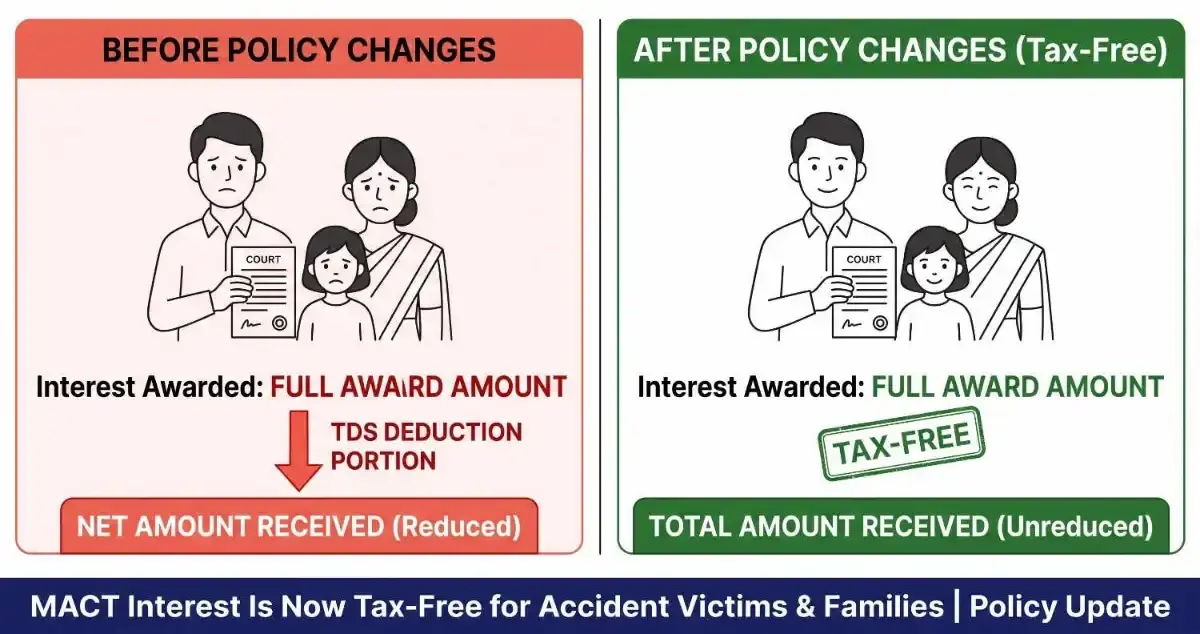
MACT interest income TDS exemption 2026 explained: who qualifies, old vs new Act rules, the FD interest trap, refund steps, and how to report it in your ITR.
Jul 24, 2026