

TAN is still required for NRI property purchase until 30 Sept 2026. Learn the rules, TDS rates, and what changes from 1 October 2026.
No, not yet. If you're buying property from an NRI, you still need a TAN, and that stays true right up to 30 September 2026. From 1 October 2026, resident individual and HUF buyers can use their PAN instead, once an amendment to Section 397(1)(c) of the Income-tax Act, 2025 comes into force. Skip the TAN before that date and your TDS deposit can get rejected.
When you buy a property from someone living outside India, the law puts the responsibility on you, the buyer, to deduct tax before you pay the seller. It isn't the seller's job. This comes from Section 393(2), Table Serial No. 17, of the Income-tax Act, 2025, which replaced the old Section 195 (a lot of CAs and property websites still call it "Section 195" out of habit, so don't be thrown off if you see that).
Right now, meeting that duty means applying for a Tax Deduction and Collection Account Number, just to close a deal you'll probably never repeat. That's exactly what Budget 2026 fixes. From 1 October 2026, you'll be able to deposit TDS using your own PAN through a challan-cum-statement, the same way it already works when you buy from a resident seller.
One thing worth clearing up early: TAN for NRI property purchase is about you buying from an NRI. If an NRI is buying property from you, that's an entirely different provision (194-IA under the old law, now Section 393(1), Serial No. 3(i)), and it has always run on PAN alone. Mixing up the two directions is one of the most common mistakes people make here.
Applies to | Does not apply to |
|---|---|
Resident individual buyers purchasing from an NRI seller | Companies, LLPs, and partnership firms buying from an NRI |
Resident HUFs buying from an NRI seller | Buyers purchasing from a resident seller (always PAN-based, under Section 393(1)) |
Buyers whose payment or credit falls on or after 1 October 2026 | Payments made before 1 October 2026, even if the property gets registered later |
A quick note on the grey areas: a company director buying a flat in his own name is still covered by this relief, because the rule looks at who the buyer is on paper, not their job title. But the moment the sale deed names the company or LLP as the purchaser, TAN is compulsory again.
Most articles on this topic just say TAN is "gone." It isn't, not yet. It's being phased out from a specific date, for a specific type of buyer, and everyone else still needs one.
Before 1 October 2026: the buyer applies for a TAN under Section 397. TDS is deducted under Section 393(2), Serial No. 17. A quarterly return goes in through Form 144, which replaced the old Form 27Q, and the certificate issued to the seller is Form 131, replacing the old Form 16A. You can check the current forms and rules directly on the Income Tax Department's official site.
From 1 October 2026, for resident individuals and HUFs only: no TAN application needed. You deposit tax straight from your PAN, using a challan-cum-statement, in the same spirit as Form 141 (which already rolls the old Form 26QB into one step for resident-seller deals). The exact form number for this new NRI-seller, PAN-based challan hasn't been officially notified yet as of mid-2026. Industry commentary and tax publications describe how it's expected to work, but the specific form is still pending a CBDT notification, so it's worth checking the Income Tax Department's forms page closer to the date before you rely on any particular form name.
The TDS rate itself doesn't change either way:
Nature of gain | Holding period | Rate |
|---|---|---|
Long-term capital gain | Over 24 months | 12.5%, no indexation, under the provision that replaced Section 112 of the 1961 Act |
Short-term capital gain | 24 months or less | Applicable slab rate |
No PAN furnished by the NRI seller | Either | 20%, under Section 397(2) |
Now, let's put the ₹50 lakh myth to rest properly. That threshold only applies when your seller is a resident, under Section 393(1), Serial No. 3(iii). Buy from an NRI, and there's no threshold at all — TDS kicks in from the very first rupee of the sale price. Even a ₹12 lakh flat bought from your NRI uncle attracts TDS on the full amount. This single mix-up causes some of the costliest errors buyers make on NRI property deals.
Suresh, based in Pune, agrees to buy a flat from his NRI cousin in Dubai for ₹80 lakh, with registration set for August 2026. His cousin bought the flat back in 2015, so the gain counts as long-term.
TDS = ₹80,00,000 × 12.5% = ₹10,00,000
Add 4% cess: ₹10,00,000 × 1.04 = ₹10,40,000
Net payment to the seller = ₹80,00,000 − ₹10,40,000 = ₹69,60,000
Since the deal closes before 1 October 2026, Suresh still needs to apply for a TAN first, then file Form 144 every quarter.
That's ₹10.4 lakh locked up as TDS. Suresh's cousin could have avoided most of this by applying for a lower TDS certificate before the sale — more on that further down.
Farida, a resident buyer in Nagpur, is buying a plot from an NRI seller for ₹60 lakh, paid in three instalments: ₹20 lakh in August 2026, ₹20 lakh in September 2026, and ₹20 lakh in November 2026.
TDS is triggered at the time of credit or payment, whichever comes first, instalment by instalment, not on the whole deal at once.
The August and September instalments fall before 1 October, so Farida needs a TAN for those, filed through Form 144.
The November instalment falls after 1 October, so she can use her PAN directly for that one.
Assuming a long-term gain, TDS on each ₹20 lakh instalment works out to ₹20,00,000 × 12.5% × 1.04 = ₹2,60,000.
A word of caution here: this instalment-by-instalment reading follows the general "credit or payment, whichever is earlier" rule used elsewhere in TDS law, but no specific CBDT circular has confirmed this for the TAN relief. If your purchase straddles the cutover date like Farida's, it's worth running it past a CA before you structure the payments.
Right now: apply for a TAN on the e-filing portal, under Services, then TAN. Deduct TDS at the applicable rate at the time of payment or credit. Deposit it through Challan ITNS 281, quoting the TAN. File Form 144 every quarter — due 31 July, 31 October, 31 January, and 31 May. Issue Form 131, the TDS certificate, within 15 days of the return's due date.
From 1 October 2026, for eligible buyers: deduct TDS at the same rate as always, but deposit it using your PAN through the notified challan-cum-statement instead of a TAN. Whether a separate quarterly return will still be needed after that date, or whether the challan-cum-statement counts as the complete filing, hasn't been settled yet — different sources describe it differently, and it's likely to become clear only once CBDT issues the actual notification.
Not sure which side of the timeline your deal falls on? You can run the numbers through Toolisky's Long-Term Capital Gains Tax Calculator first. The math for TAN for NRI property purchase doesn't change on 1 October — only the paperwork does. For the full old-to-new section mapping, see our TDS Rate Chart for FY 2026-27, and for the bigger picture on the transition, our Income Tax Act 2025 vs 1961 guide walks through it in detail.
Problem 1: TDS was deducted at 20% because the seller's PAN was missing, and the seller has since sent it over. File a correction statement through TRACES after the TDS has been deposited. A paid challan can't be lowered retroactively, but the seller can claim credit for the higher amount deducted, and any remaining instalments can go through at the correct, lower rate.
Problem 2: TAN was skipped, assuming the new PAN-only rule already applied, but the actual payment fell before 1 October 2026. What matters is the payment or credit date, not the date you happen to be reading this. Apply for a TAN right away and correct the filing. Interest for the delay applies under Section 398.
Problem 3: Form 144 was filed quoting "Section 195" instead of the correct Section 393(2), Serial No. 17. CPC may flag the return as defective. File a correction statement quoting the right section. Usually only the deductee-level entry needs fixing, not a fresh deposit.
Keep these ready before you sign anything. A missing PAN is the one gap that actually costs real money, since it triggers the higher 20% TDS rate automatically.
Document | Digital copy accepted? | Where to get it |
|---|---|---|
Buyer's PAN | Yes | e-filing portal, if you don't already have one |
NRI seller's PAN (mandatory, or 20% TDS applies) | Yes | Provided by the seller; apply via NSDL or Protean if missing |
Sale deed or agreement of sale | Yes | Drafted by your property lawyer |
TAN application acknowledgment, if the deal falls before 1 October 2026 | Yes | e-filing portal, Form 49B |
Lower TDS certificate, Form 128 (replaces the old Form 13) | Yes | Seller applies via TRACES under Section 395(1) |
Stamp duty valuation certificate | Yes | Sub-registrar's office |
FEMA repatriation documents for the seller | Yes | Arranged by the seller's CA |
Getting TAN for NRI property purchase wrong — whether it's a missed deduction or a late filing — carries real costs. Here's what each mistake actually attracts.
Failed to deduct TDS: interest at 1% per month, from the due date to the date of actual deduction, under Section 398.
Deducted but not deposited: interest at 1.5% per month, under Section 398(3).
Late Form 144 filing: ₹200 per day, capped at the quarter's TDS amount, under Section 427.
Return left unfiled a year past its due date: a penalty ranging from ₹10,000 to ₹1,00,000, under Section 461.
No PAN provided by the NRI seller: a flat 20% TDS instead of 12.5%, under Section 397(2).
If you're buying from an NRI today, you still need a TAN. That only changes from 1 October 2026, and only for individual and HUF buyers. Check your actual payment date before assuming the new process applies to you, bring your CA in early if a lower TDS certificate could free up cash for your seller, and double-check your numbers with Toolisky's Long-Term Capital Gains Tax Calculator before you file.
Yes. The TAN relief only kicks in from 1 October 2026. If your payment or credit happens before that date, you still need to get a TAN and file Form 144 every quarter, exactly as under the current process.
No — and this is the most common myth going around. TAN becomes optional for one category only: resident individual and HUF buyers, from 1 October 2026. Companies, firms, and LLPs still need one, regardless of the date.
Yes, always. The Section 397(1)(c) relief applies specifically to resident individual and HUF buyers. A company, LLP, or firm must still get a TAN and follow the existing quarterly filing process, even after 1 October 2026.
Form 26QB, now renumbered Form 141, is for buying from a resident seller — a one-time challan, no TAN needed, and the ₹50 lakh threshold applies. Form 27Q, now Form 144, is for buying from an NRI — a quarterly return that needs a TAN, with no threshold at all. Applying resident-seller logic to an NRI seller is one of the most frequent buyer errors out there.
No — that direction never needed a TAN in the first place. When an NRI buys from a resident, TDS runs under the same Section 393(1), Serial No. 3(iii) mechanism as any resident-to-resident sale, and it's always been PAN-based. Budget 2026 only touches the reverse direction: a resident buying from an NRI.
If you're an individual or HUF closing a fresh purchase after that date, you can use your PAN under the new mechanism instead. But if you have an ongoing quarterly obligation on a transaction from before October, that still needs to be filed through to completion.
That counts as a defective filing, since the PAN-based mechanism legally begins only on 1 October 2026. Apply for a TAN retroactively and refile Form 144 the correct way. Interest under Section 398 may apply for the delay.
Yes. The seller can file Form 128 (which replaced the old Form 13) under Section 395(1) to request a lower or nil TDS certificate. If the Assessing Officer approves it, based on the actual computed liability after exemptions like Section 54, you deduct at that lower, certified rate instead.
Under the current rule, each buyer deducting their share of TDS typically needs a separate TAN. Whether joint individual or HUF buyers can each use the PAN-based mechanism independently after 1 October 2026 hasn't been clarified in any official notification yet, so this is one to confirm with a CA closer to the date.
No, regardless of the purchase year. The indexation benefit was removed for most property sales from 23 July 2024 onward, and that continues to govern sales in FY 2026-27. The seller pays 12.5% on the full gain either way.
No. Unlike the ₹50 lakh threshold for resident-to-resident sales, there's no minimum here. TDS applies from the first rupee, whether the property is worth ₹10 lakh or ₹10 crore. That's the single biggest difference between buying from an NRI and the everyday resident-to-resident process most people already know.
For educational purposes only. Please verify all figures at official sources before acting. Toolisky is not affiliated with any government body. Consult a qualified CA or legal professional before making compliance decisions. See toolisky.com/accuracy-and-limitations.
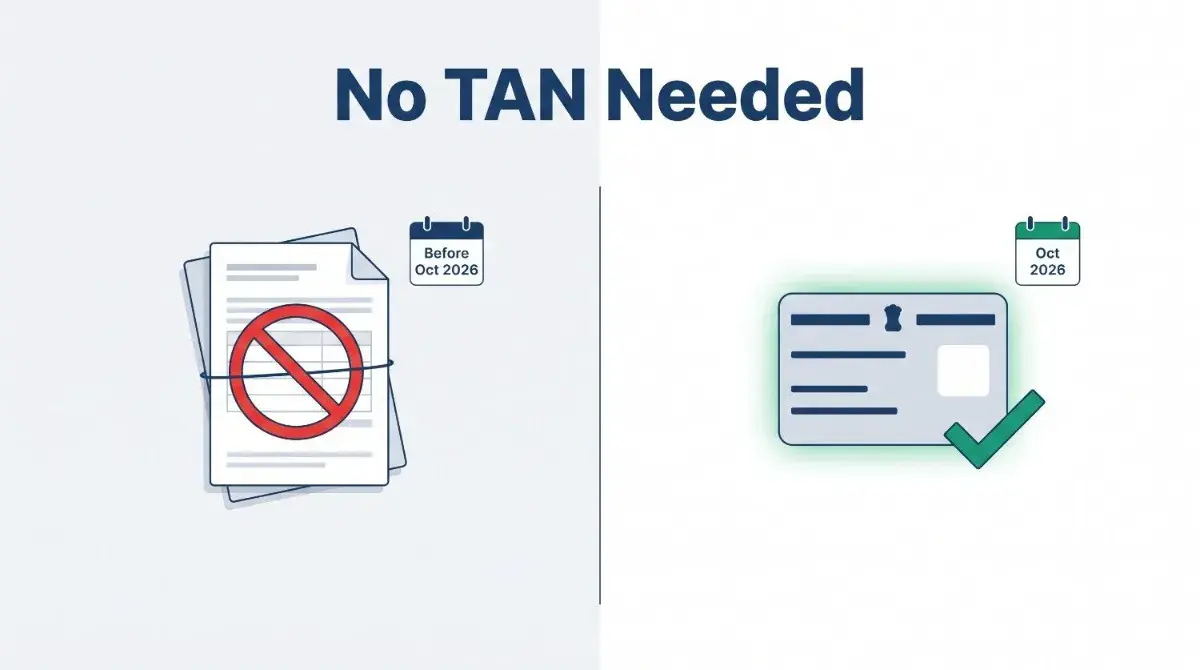
No TAN for NRI property purchase applies only from 1 October 2026, and only to resident individual and HUF buyers. Get the rates, forms, and dates you need.
Jul 25, 2026

Did you lose the SGB premature redemption tax exemption? Here's exactly who's affected, how much tax applies now, and how to check your own bonds.
Jul 24, 2026
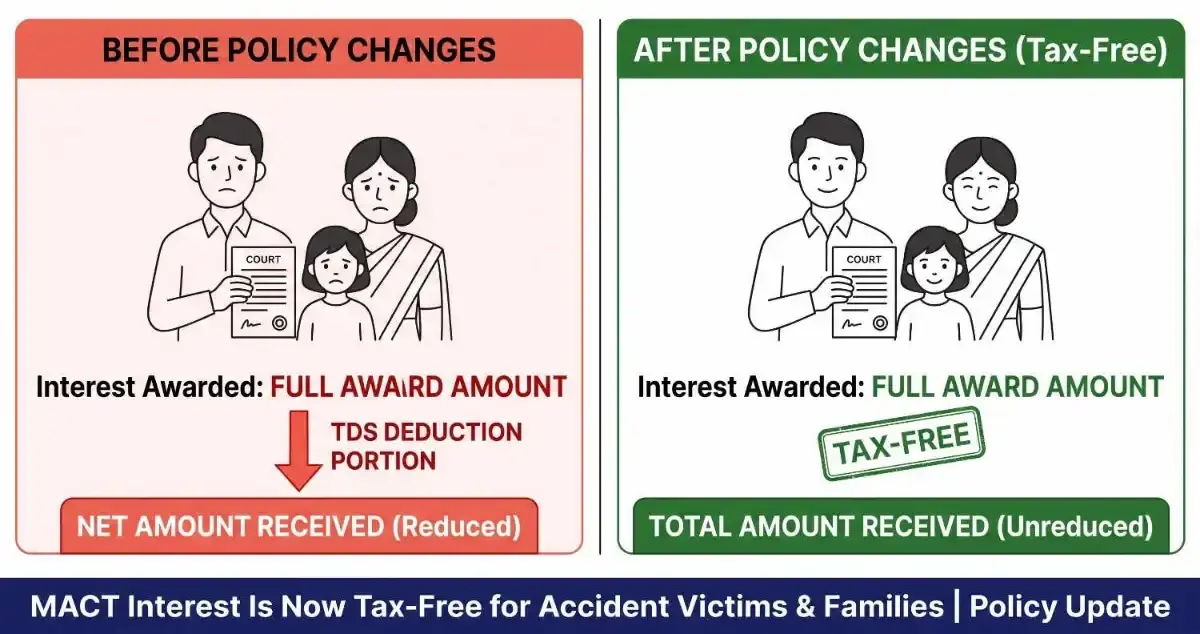
MACT interest income TDS exemption 2026 explained: who qualifies, old vs new Act rules, the FD interest trap, refund steps, and how to report it in your ITR.
Jul 24, 2026