

TDS on property purchase from NRI in 2026: 12.5% LTCG rate, TAN rules until 30 September, Form 144 and Form 128 explained, with a worked ₹ example.
TDS on property purchase from NRI works differently from a regular resident-to-resident deal. If you're buying property from an NRI in 2026, you must deduct TDS at 12.5% on long-term gains, or slab rate on short-term gains, under Section 393(2) of the Income Tax Act, 2025, on the entire sale price, not just the seller's profit. You'll also still need a TAN for this until 30 September 2026. Only individual and HUF buyers get to switch to a PAN-based challan after 1 October 2026.
A quick note on which law applies: this article covers deals from 1 April 2026 onward, which fall under the Income-tax Act, 2025. A sale that closed before that date still runs on the old Section 195 of the Income-tax Act, 1961. The rules themselves barely change, only the section number does, so quote the right one for the right period. Every section number here was checked against the Income Tax Department's own 1961-to-2025 mapping utility and cross-verified against multiple independent CA sources, twice.
TDS on property purchase from NRI is the tax you, as the buyer, must deduct before you pay an NRI seller. It falls under Section 393(2), Table Serial No. 17 of the Income Tax Act, 2025, the direct successor to the old Section 195 that most people still search for. It isn't optional, and it isn't the seller's job. You deduct it, deposit it, and file the return. Skip a step, and the liability lands on you, not your NRI seller.
Don't skim this table. Most mistakes in NRI property deals start with buyers assuming familiar resident-seller rules apply here too. They don't.
Applies To | Does NOT Apply To |
|---|---|
Any resident, HUF, company, or firm buying a flat, plot, or commercial unit from an NRI or foreign seller | Buying from a resident Indian seller (that falls under Section 393(1), Form 141, with the usual ₹50 lakh threshold) |
Every payment, at any value, with no ₹50 lakh floor | Agricultural land, which is excluded from the definition of "immovable property" under Section 26(19) |
Instalments, advances, and final settlements alike | Pure gifts or inheritance, where no money actually changes hands |
A note on grey areas: what matters is the seller's residential status on the date of each payment, not the date you signed the agreement. If that status changes partway through the deal, get it confirmed in writing before you make the next instalment.
Here's where competing articles blur two different things together: what's true right now, and what's only proposed for later. Keep them separate, because mixing them up is how buyers end up under-deducting.
Rates (unchanged either way):
Nature of Gain | Holding Period | Rate |
|---|---|---|
Long-Term Capital Gain (LTCG) | Over 24 months | 12.5%, with no indexation benefit, plus surcharge and cess |
Short-Term Capital Gain (STCG) | 24 months or less | Taxed at the applicable slab rate, plus surcharge and cess |
Seller has no PAN | Either | A flat 20% under Section 397(2) |
Add the 4% cess, and the TDS rate on NRI property sale for a long-term deal works out to an effective 13% before any surcharge. [Source: cleartax.in, taxguru.in]
TAN, before and after 1 October 2026:
Until 30 September 2026 | From 1 October 2026 | |
|---|---|---|
Who still needs a TAN | Every buyer, no exceptions | Companies, firms, and LLPs still do |
Individual or HUF buyer | TAN required (Form 49B) | No TAN, just a PAN-based challan under the amended Section 397(1)(c) |
Return filed | Form 144, which replaced the old Form 27Q | Not yet notified by the CBDT |
TDS certificate | Form 131, which replaced Form 16A | Not yet notified |
[VERIFY: exact challan and return form for the post-1 October 2026 PAN-based mechanism. CBDT notification is still pending as of July 2026. Source: incometaxindia.gov.in/income-tax-forms-2026]
Curious how the TAN-versus-PAN timeline plays out day to day? Toolisky's TAN for NRI property purchase guide goes deeper into that specific transition.
The ₹50 lakh threshold you might know from resident deals doesn't exist here. Buy a ₹15 lakh studio from your NRI cousin, and TDS still applies from the first rupee, since Section 393(2) has no threshold column at all. Many buyers learn this the hard way, right at registration.
Old-to-new section mapping, gathered in one table:
1961 Act | 2025 Act | Form (old to new) |
|---|---|---|
Section 195 | Section 393(2), Sl. No. 17 | Form 27Q to Form 144 |
Section 197 | Section 395(1) | Form 13 to Form 128 |
Section 206AA | Section 397(2) | No form change, rate provision only |
Section 201 | Section 398 | No form change, default provision only |
Section 234E | Section 427 | No form change, late-fee provision only |
Section 271H | Section 461 | No form change, penalty provision only |
Form 16A certificate | Section 395(4) | Form 16A to Form 131 |
For the complete Section 393 rate chart across every payment type, not just property, see Toolisky's TDS Rate Chart for FY 2026-27.
Example 1, the common case. Priya, a buyer in Bengaluru, agrees to buy a flat from her NRI uncle in Toronto for ₹95,00,000. He's held it five years, so this is a long-term gain. Registration is set for August 2026, before the TAN relief kicks in.
TDS = ₹95,00,000 × 12.5% = ₹11,87,500
Add 4% cess: ₹11,87,500 × 1.04 = ₹12,35,000
Net paid to the seller = ₹95,00,000 − ₹12,35,000 = ₹82,65,000
Since her deal closes before 1 October 2026, Priya applies for TAN first, deducts at each payment, deposits via challan, and files Form 144 for that quarter.
This skips surcharge, which depends on the seller's total Indian income for the year. Check that separately with a CA.
Example 2, the edge case most guides skip. Ramesh in Nagpur buys a plot from an NRI seller in Singapore for ₹40,00,000, paid in two instalments of ₹20,00,000 each: one in September 2026, one in November. The seller bought this plot only 18 months ago, so it's short-term, not long-term. Since STCG is taxed at slab rates and Ramesh can't know his seller's exact slab, he conservatively deducts at 30%.
September instalment: ₹20,00,000 × 30% = ₹6,00,000, plus 4% cess = ₹6,24,000. Before 1 October, so Ramesh needs a TAN and reports it through Form 144.
November instalment: same math, ₹6,24,000. After 1 October, and Ramesh is an individual buyer, so he deposits this one using his PAN.
Total TDS across both: ₹12,48,000. Seller receives ₹27,52,000 net of the ₹40,00,000 sale price.
Whether this instalment-by-instalment reading holds up in a CBDT circular isn't confirmed yet. Run it past your CA if your deal straddles 1 October 2026.
There's no dedicated online portal for NRI-property deals yet. It runs through the standard TAN and challan system already in place.
Confirm the seller's residential status and PAN before the first payment.
Calculate TDS on the entire sale consideration; unlike resident deals, there's no stamp-duty comparison rule here.
Apply for TAN through Form 49B on the income tax e-filing portal if your payment falls before 1 October 2026.
Deduct TDS at the time of credit or payment, whichever comes first.
Deposit through Challan ITNS 281, quoting your TAN, within 7 days from month-end.
File Form 144 by the quarterly due date: 31 July, 31 October, 31 January, or 31 May.
Issue Form 131 to your seller within 15 days of the return's due date, so they can claim credit.
Want the exact figure before locking in a payment schedule? Run your numbers through Toolisky's Long-Term Capital Gains Tax Calculator. It already applies the 12.5% rate and cess.
You deducted at 1% instead of the correct rate. This usually happens when buyers apply resident-seller Section 194-IA logic out of habit. Fix it by filing a correction statement, depositing the shortfall along with interest under Section 398, and refiling Form 144 with the correct numbers. Don't wait around for a notice; the gap only grows every month you leave it.
You skipped the TAN, assuming the PAN-based rule already applied. What actually matters is your payment date, not today's date. If the payment fell before 1 October 2026, apply for a TAN right away and expect to pay interest under Section 398 for the delay.
Form 144 got flagged as defective because it quoted "Section 195" instead of "Section 393(2), Sl. No. 17." File a correction on the deductee row. Usually you won't need a fresh deposit, just the right section reference.
Document | Digital Copy OK? | Where to Get It |
|---|---|---|
Buyer's PAN | Yes | e-filing portal |
NRI seller's PAN (mandatory; missing it triggers 20% TDS) | Yes | From the seller directly; NSDL or Protean if they don't already have one |
Sale deed or agreement of sale | Yes | Your property lawyer |
TAN acknowledgment, if the payment is before 1 October 2026 | Yes | e-filing portal, via Form 49B |
Lower or nil TDS certificate, Form 128, if applicable | Yes | Seller applies through the TRACES portal under Section 395(1) |
Seller's Tax Residency Certificate plus Form 41, for any treaty-rate claim | Yes | Seller's home-country tax office |
Stamp duty valuation certificate | Yes | Sub-registrar's office |
If your seller wants to claim a lower treaty rate under a DTAA, don't deduct at that lower rate without the TRC and Form 41 in hand first. Toolisky's DTAA guide walks through exactly how that self-declaration works, and what a rejected Form 41 usually means for your timeline.
Getting this wrong is genuinely expensive, and the buyer carries all of it, not the seller.
Failed to deduct TDS: you become an "assessee in default" under Section 398. The department can recover the shortfall directly from you, plus 1% monthly interest from the date it was deductible to the date you actually deduct it.
Deducted but not deposited: 1.5% monthly interest under Section 398(3), running from the deduction date to the actual deposit date.
Late Form 144 filing: ₹200 per day under Section 427, capped at that quarter's total TDS.
Return left unfiled a year past due: anywhere from ₹10,000 to ₹1,00,000 under Section 461.
Under-deduction penalty: equal to the amount you should have deducted, under Section 462.
No PAN from the seller: an automatic 20% deduction under Section 397(2). Not technically a fine, but it hits your seller's cash flow the same way one would.
If you deducted TDS on an NRI property purchase any time between April and June 2026, your Form 144 for that quarter is due on 31 July 2026, which is just around the corner as this is being written. Most guides on this topic were drafted before the form even existed, so they don't flag this at all. Don't let a routine renumbering exercise turn into a ₹200-a-day bill for you.
Yes, right now you do. That requirement only eases from 1 October 2026, and even then, only for resident individual and HUF buyers. Companies and firms still need a TAN regardless of the date.
No, and this is probably the most common myth out there. The 20% rate only kicks in if the seller hasn't furnished a PAN, under Section 397(2). With a valid PAN, long-term gains are taxed at 12.5% and short-term gains at slab rates, both plus cess.
Not fully, and not yet. The relief only starts from 1 October 2026, and it only covers resident individual and HUF buyers. If you've seen "TAN scrapped" as a blanket statement somewhere, that's an incomplete headline, not the full rule.
Section 194-IA, now Section 393(1), covers resident-to-resident deals: 1% TDS, a ₹50 lakh threshold, and no TAN required. Section 195, now Section 393(2), covers NRI sellers instead: 12.5% or slab-rate TDS, no threshold at all, and a TAN required until October 2026.
No, not before 1 October 2026. Trying it early counts as a defective filing, and you'll need to get a TAN and refile correctly, with interest under Section 398 added on for the delay.
Take the full sale consideration, apply 12.5% for long-term gains or the slab rate for short-term gains, then add 4% cess plus surcharge if it applies. On a ₹1 crore long-term sale, that works out to ₹12,50,000 in TDS plus ₹50,000 in cess: ₹13,00,000 total, before any surcharge.
The buyer becomes an "assessee in default" under Section 398, personally liable for the shortfall, 1% monthly interest, and a penalty equal to the shortfall under Section 462 if the Assessing Officer decides to pursue it.
Yes, through Form 128, which replaced the old Form 13, filed under Section 395(1). If the Assessing Officer approves a lower or nil rate based on the seller's actual computed tax liability, after exemptions like Section 54 reinvestment, the buyer only deducts at that certified rate.
On the entire sale price, unless the seller already holds a valid Form 128 lower or nil certificate before the transaction happens. This is exactly why so many NRIs end up waiting months for a refund instead of just applying upfront.
Only if the seller hands over a valid Tax Residency Certificate and Form 41, which replaced Form 10F, before the payment is made, under Section 159(8). Without that paperwork, deduct at the standard rate. Don't assume a treaty rate applies on its own, because it won't.
Under the rule as it stands today, yes, each buyer deducting their own share generally needs a separate TAN. Whether that changes for joint individual or HUF buyers after October hasn't been clarified yet. [VERIFY: joint-buyer treatment post-1 October 2026; source: pending CBDT notification]
Confirm your seller's PAN and residential status today, before your next payment goes out. That one check alone prevents the single costliest mistake on this whole list. If your Q1 payment already happened, get Form 144 filed before 31 July 2026. Check the Income Tax Department's official website before you file anything, and run your numbers through Toolisky's LTCG calculator first.
For educational purposes only. Verify all figures at official sources before acting. Toolisky is not affiliated with any government body. Consult a qualified CA or legal professional before making compliance decisions. See toolisky.com/accuracy-and-limitations.
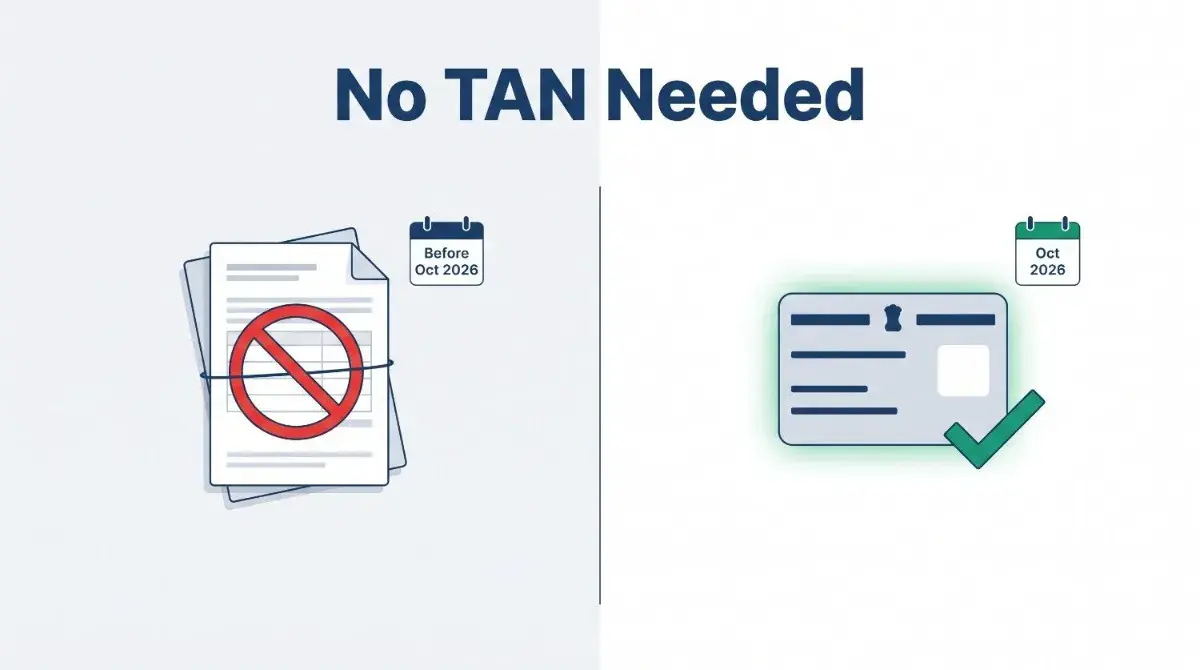
No TAN for NRI property purchase applies only from 1 October 2026, and only to resident individual and HUF buyers. Get the rates, forms, and dates you need.
Jul 25, 2026

Did you lose the SGB premature redemption tax exemption? Here's exactly who's affected, how much tax applies now, and how to check your own bonds.
Jul 24, 2026
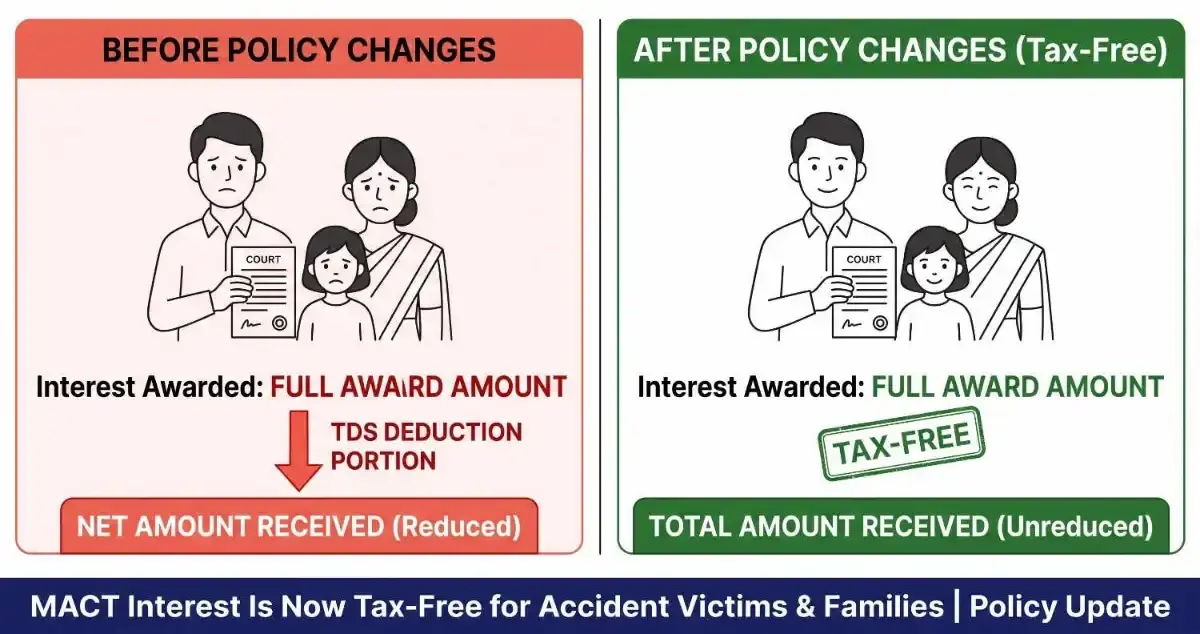
MACT interest income TDS exemption 2026 explained: who qualifies, old vs new Act rules, the FD interest trap, refund steps, and how to report it in your ITR.
Jul 24, 2026