
Home loan tax benefits FY 2025-26 explained: Section 24(b), 80C, 80EEA limits, old vs new regime, real ₹ math, and the new Act's section numbers.
A home loan can knock ₹3.5-5 lakh off your taxable income every year, but only if you're on the old regime and only if you get the ₹2 lakh interest cap right. Here's the exact math, the correct section numbers under both tax laws, and where most borrowers quietly lose money.
Home loan tax benefits are deductions on the interest and principal you repay on a housing loan. Two laws matter here. Income you earn up to FY 2025-26 (assessed in AY 2026-27) is still governed by the Income-tax Act, 1961 — interest sits under Section 24(b), principal under Section 80C, and first-time buyer add-ons under Section 80EE and Section 80EEA.
From Tax Year 2026-27 onward, the Income-tax Act, 2025 takes over (it came into force on 1 April 2026, replacing the 1961 Act entirely). Interest moves to Section 22(2), principal to Section 123, and the two first-time buyer add-ons become Section 130 and Section 131. I've checked these against the Income Tax Department's own section text and its 1961-vs-2025 mapping material, not just recalled them — the numbers below are the ones your CA will actually cite from FY 2026-27 onward.
This article covers FY 2025-26 (AY 2026-27), so it runs on 1961 Act numbers throughout, with the 2025 Act number noted next to each section for anyone reading this after 1 April 2026.
Applies to | Does NOT apply to |
|---|---|
Individuals and HUFs with a loan from a bank or housing finance company | Loans from friends or relatives — no 24(b) deduction |
Self-occupied, let-out, or under-construction residential property | Commercial property loans |
Taxpayers filing under the old tax regime | Taxpayers under the new regime — self-occupied interest and 80C are both blocked |
Joint owners who are also co-borrowers | Co-borrowers who aren't co-owners, even if they pay the EMI |
NRIs — interest and principal work the same way as for residents | — |
That co-borrower line trips up a lot of families. If your son is added as a co-borrower purely to boost loan eligibility but isn't on the title, he gets zero deduction — no matter how much EMI he actually pays.
Section 24(b) [→ Section 22(2), 2025 Act] — Interest deduction
Self-occupied property: capped at ₹2,00,000 a year, old regime only. The Income Tax Department's own AY 2026-27 guidance confirms this figure — ignore any site claiming it rose to ₹3 lakh for FY 2025-26; that number isn't backed by any Finance Act or CBDT notification. [Source: incometax.gov.in]
Let-out property: entire interest is deductible, no upper cap. But the loss you set off against other income (salary, business, etc.) is capped at ₹2,00,000 a year, with the rest carried forward for 8 years.
Two self-occupied properties rule (continuing into FY 2025-26) You can treat up to two houses as self-occupied with nil annual value. The catch — the ₹2 lakh interest cap is combined across both properties, not ₹2 lakh each. Own a third house and don't rent it out? It's deemed let-out and taxed on notional rent.
Section 80C [→ Section 123, 2025 Act] — Principal deduction
Up to ₹1,50,000 a year, shared with PPF, ELSS, life insurance, and every other 80C investment you make.
Stamp duty and registration charges qualify too, but only in the year you actually pay them.
Sell the property within 5 years of possession, and every 80C deduction you claimed on it gets added straight back to your income in the year of sale.
Section 80EE [→ Section 130, 2025 Act]
Extra ₹50,000 on interest, over and above 24(b).
Loan sanctioned between 1 April 2016 and 31 March 2017, loan value ≤ ₹35 lakh, property value ≤ ₹50 lakh, and you owned no other house on the sanction date.
Section 80EEA [→ Section 131, 2025 Act]
Extra ₹1,50,000 on interest for affordable housing, over the 24(b) cap.
Loan sanctioned between 1 April 2019 and 31 March 2022, stamp duty value ≤ ₹45 lakh, first-time buyer, not already claiming 80EE.
The sanction window shut on 31 March 2022 and, as of Budget 2026, hasn't reopened. So you can only claim 80EEA if you're still repaying a loan sanctioned inside that window — a fresh loan today doesn't qualify.
Old vs New Regime Old regime keeps all four sections above alive. New regime blocks 24(b) for self-occupied property, blocks 80C entirely, and blocks 80EE/80EEA outright. The only thing it allows is interest against a let-out property's rental income — and even that has no loss carry-forward against your other income.
Rule of thumb: if your home loan interest, 80C claims, and other deductions together cross roughly ₹4.5-5 lakh a year, the old regime usually wins for someone in the 20-30% slab. Below that, the new regime's lower rates and ₹75,000 standard deduction tend to catch up fast. Run your own numbers on the Old vs New Tax Regime Calculator rather than guessing — the breakeven point moves with your income.
Example 1 — the common case: Suresh, self-occupied, single owner
Suresh, a salaried employee in Pune, took a ₹35 lakh home loan in FY 2023-24. In FY 2025-26 he pays ₹2,80,000 in interest and ₹1,10,000 in principal.
Section 24(b): capped at ₹2,00,000, even though he actually paid ₹2,80,000.
Section 80C: ₹1,10,000, fully allowed since it's within the ₹1.5 lakh ceiling.
Total deduction: ₹3,10,000.
In the 20% slab plus 4% cess, that works out to roughly ₹64,480 saved — but only if he stays on the old regime.
Example 2 — the edge case competitors skip: Priya and Ramesh, joint owners, let-out property
Priya and Ramesh co-own a flat 50:50, let out at ₹35,000/month. Loan interest for the year is ₹6,00,000; municipal taxes paid are ₹12,000.
Rent received: ₹4,20,000 minus municipal tax ₹12,000 = Net Annual Value ₹4,08,000.
Standard deduction (30% of NAV): ₹1,22,400.
Interest deduction: full ₹6,00,000 since it's let-out — split ₹3,00,000 each as 50:50 owners.
Income from house property: ₹4,08,000 − ₹1,22,400 − ₹6,00,000 = minus ₹2,94,400 (a loss).
Each partner's share of the loss is ₹1,47,200. That's well within the ₹2,00,000 per-person cap on setting off house-property loss against other income, so both can use the full ₹1,47,200 against their salary this year.
Curious how this compares on a fully let-out property with no self-occupied component? Our rental income tax guide walks through the GAV-to-NAV math in more depth.
Pull your annual interest and principal breakup from the lender's provisional certificate.
Apply the Section 24(b) cap to interest — ₹2,00,000 for self-occupied, no cap for let-out.
Add principal plus stamp duty/registration (year of payment only), capped at ₹1,50,000 under 80C.
Check 80EE/80EEA eligibility against your loan's sanction date. Outside those windows? Skip this step.
Add pre-construction interest, if any, in the year construction finishes (see below).
Total deduction = Step 2 + Step 3 + Step 4 + Step 5. Multiply by your slab rate to see what you actually save.
Pre-construction interest isn't deductible in the year you pay it. It gets accumulated and claimed in 5 equal instalments, starting from the year construction is completed — still within the overall ₹2 lakh self-occupied cap.
1. You claimed 24(b), but your ITR shows it disallowed. Usually the property isn't registered in your name yet, or the completion certificate date doesn't match what you entered. Check the "House Property" schedule and re-enter the completion date exactly as it appears on your CC/OC.
2. TDS mismatch — the bank shows different interest than what you claimed. Request a fresh interest certificate from your lender (most issue these by May-June) and revise your return with the correct figure before the revised-return deadline closes.
3. You missed claiming 80EEA because you didn't realise your sanction date qualified. You can still file a revised return if the original deadline hasn't passed, or an updated return (ITR-U) within the permitted window — though ITR-U comes with an additional tax cost. Pull your loan sanction letter first to confirm the exact date.
Home loan interest certificate (provisional + final) from your lender — digital copy accepted.
Loan sanction letter showing the exact sanction date, needed for 80EE/80EEA eligibility.
Possession or completion certificate from the builder or municipal authority, needed for pre-construction interest claims.
Property registration or sale deed, to prove your ownership share on joint loans.
Stamp duty and registration payment receipts, if you're claiming under 80C.
There's no separate penalty section for claiming home loan deductions wrongly, but two things will bite:
Wrong or excess claim: if scrutiny disallows it, you pay the shortfall tax plus interest for underpaid advance tax under Section 234B/234C. You can check the exact interest math on our Section 234A, 234B, 234C calculator, which also covers the corresponding Income-tax Act, 2025 provisions.
Missing the ITR deadline: late filing under Section 234A attracts 1% monthly interest on unpaid tax, plus a late fee under Section 234F of up to ₹5,000 (₹1,000 if total income is under ₹5 lakh). A belated return can also lock you out of certain regime-switching flexibility — if you were counting on the old regime specifically for these deductions, missing the window can cost you the benefit itself for that year in some filer categories.
Up to ₹2,00,000 a year under Section 24(b) for interest, plus up to ₹1,50,000 under Section 80C for principal — a combined ₹3,50,000, available only under the old tax regime. Actual savings depend on your slab rate.
Yes. Interest goes under Section 24(b) and principal under Section 80C — separate deductions with separate limits, both claimable in the same year if you meet each one's conditions.
Only for a let-out property, against rental income, with no cap. Self-occupied interest and all of Section 80C are blocked under the new regime — this is the single biggest misconception borrowers carry into ITR season.
Interest paid during construction isn't deductible right away. It's accumulated and claimed in 5 equal yearly instalments starting the year construction finishes, still within the ₹2 lakh self-occupied limit.
Yes, but only if both are co-owners on the property AND co-borrowers on the loan. Each can then independently claim up to ₹2,00,000 under 24(b) and ₹1,50,000 under 80C, based on their ownership share.
80EE gives ₹50,000 extra for loans sanctioned April 2016-March 2017 (loan ≤ ₹35L, property ≤ ₹50L). 80EEA gives ₹1,50,000 extra for loans sanctioned April 2019-March 2022 (stamp value ≤ ₹45L). You can't claim both on the same loan.
Yes. You can treat up to two properties as self-occupied, but the ₹2 lakh interest cap under Section 24(b) applies combined across both — not per property. A third, unrented house gets taxed on deemed rental income.
You can still file, but as a belated return with interest under Section 234A and a late fee under Section 234F. Some deduction claims and loss carry-forward benefits get restricted for belated filers, so don't treat the deadline as optional if these benefits matter to you.
Not in the years you're paying it. It converts into pre-construction interest and gets claimed in 5 instalments starting the year the property is completed — you get nothing during construction itself.
Yes. For AY 2026-27, ITR-1 has been expanded to let salaried taxpayers report income from two house properties — previously this needed ITR-2. Confirm your other income sources still fit ITR-1's ₹50 lakh and eligibility limits before filing.
Can NRIs claim home loan tax benefits in India? Yes. NRIs can claim Section 24(b) and 80C deductions on Indian property loans the same way residents can, subject to correct TDS on rental income and any applicable DTAA provisions.
Check your loan sanction date against the 80EE/80EEA windows first — that one step decides whether you're leaving ₹50,000-1,50,000 on the table. Run your numbers through the Old vs New Tax Regime Calculator before you file, since these deductions only work under the old regime, and check the Income Tax Department's home loan provisions for anything you want to verify yourself.
For educational purposes only. Verify all figures at official sources before acting. Toolisky is not affiliated with any government body. Consult a qualified CA or legal professional before making compliance decisions. See toolisky.com/accuracy-and-limitations.
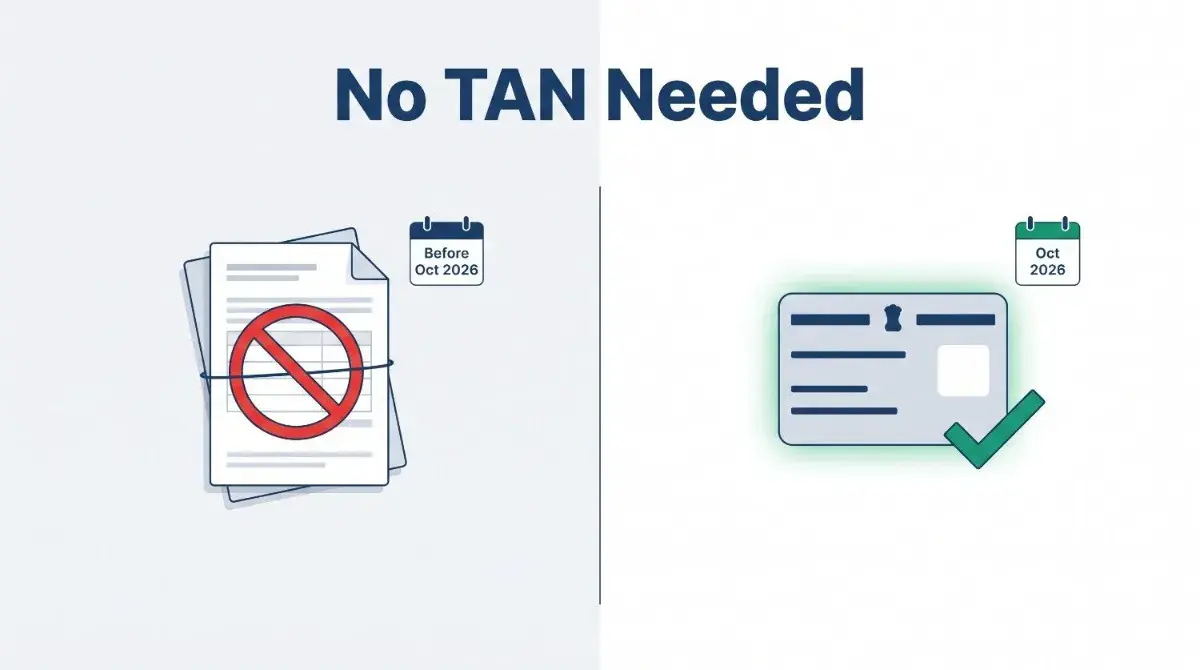
No TAN for NRI property purchase applies only from 1 October 2026, and only to resident individual and HUF buyers. Get the rates, forms, and dates you need.
Jul 25, 2026

Did you lose the SGB premature redemption tax exemption? Here's exactly who's affected, how much tax applies now, and how to check your own bonds.
Jul 24, 2026
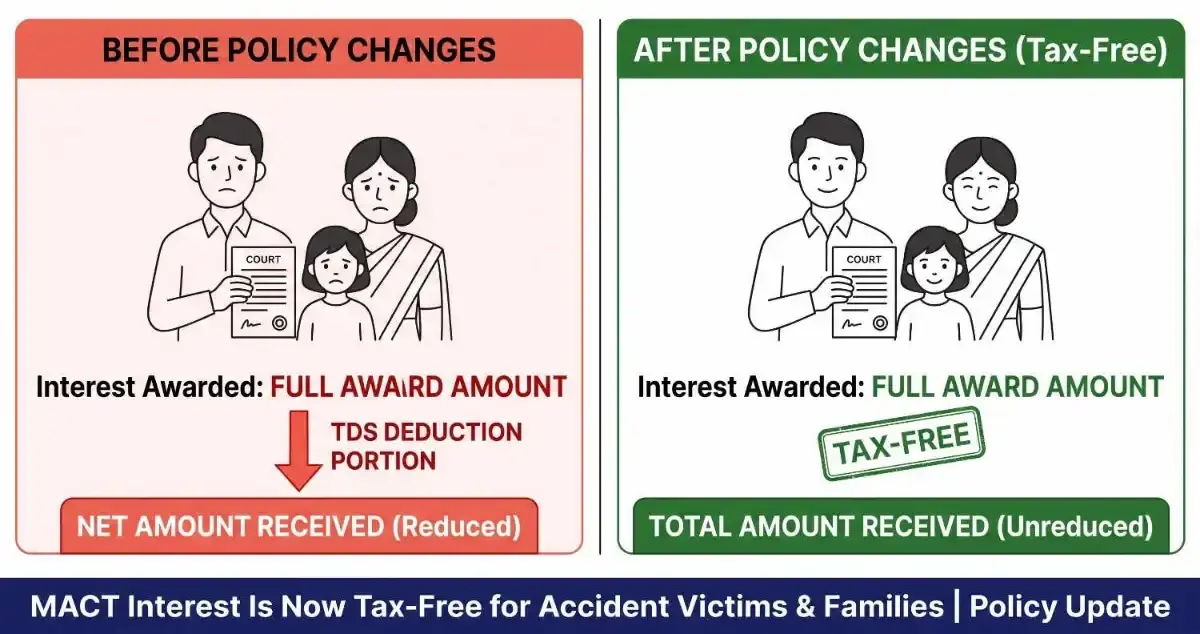
MACT interest income TDS exemption 2026 explained: who qualifies, old vs new Act rules, the FD interest trap, refund steps, and how to report it in your ITR.
Jul 24, 2026