

Do NRIs need to file tax returns in both India and the US? Here's who must file in each country, which forms apply, and how DTAA relief works in 2026
Yes, for most working professionals and green card holders. It's not optional just because you already pay tax somewhere else. India taxes you on what you earn here. The US taxes citizens and green card holders on income earned anywhere. If you're on an H-1B, hold a green card, or you've just moved back, you likely owe a return on both sides, though rarely double tax, thanks to the DTAA.
Dual filing means you owe a return in both India and the US for the same year. Each country taxes you under its own rules, which is exactly why NRIs have to file tax returns in both India and the US rather than picking whichever country feels simpler. India taxes NRIs only on India-sourced income, under residential status rules in Section 6 of the Income-tax Act, 1961 (the same Section 6 continues under the Income-tax Act, 2025, for income from 1 April 2026 onward). The US taxes citizens, green card holders, and anyone meeting the Substantial Presence Test (SPT) on worldwide income.
Relief from double taxation comes from the India-US DTAA. On the Indian side this sits in Sections 90, 90A and 91 of the 1961 Act [VERIFY: corresponding section under the Income-tax Act, 2025; check the official mapping utility at incometaxindia.gov.in]. On the US side, it's the Foreign Tax Credit claimed on Form 1116.
This topic falls under the Income-tax Act, 1961 for income up to 31 March 2026 (AY 2026-27), and the Income-tax Act, 2025 for income from 1 April 2026 onward (Tax Year 2026-27). Section numbers below are stated for both Acts where confirmed against incometax.gov.in, and tagged [VERIFY] where a 2025-Act number wasn't confirmed on an official source this session.
Applies to | Does NOT apply to |
|---|---|
US green card holders, at any income level, anywhere they live | Foreign nationals with no green card, citizenship, or SPT-qualifying days |
US citizens of Indian origin, wherever they live | NRIs who never crossed into US tax residency (a short business trip, say) |
H-1B/L-1 holders who pass the Substantial Presence Test | F-1/J-1 students in their first 5 calendar years (usually SPT-exempt) |
F-1/J-1 students after 5 exempt years, once SPT applies | NRIs with zero India-source income and no Indian interest, rent, or gains |
Returning NRIs in RNOR years, if foreign income is still US-taxable | RNORs whose foreign income sits fully outside the US tax net (rare) |
Anyone with India-source income (rent, NRO interest, capital gains) | — |
A green card holder owes a US return even living in India full-time all year. Citizenship-based and residence-based taxation don't reset just because you moved. Here's how it plays out for each group.
You file a US return on worldwide income every year, no matter where you live. Whether a green card holder has to file an income tax return in India depends purely on India-source income and residency days; the green card itself creates no Indian obligation.
Clearing the Substantial Presence Test (183 weighted days across the current and two prior years) makes an H-1B or L-1 holder a US tax resident, filing Form 1040 on worldwide income. On the India side, the same person stays an NRI unless they cross 182 days in India that year, which pulls global income into Indian tax for that year only.
Most F-1/J-1 students are "exempt individuals" for their first five calendar years and file Form 1040-NR, not a resident return. An OCI student in the US generally has no Indian filing obligation unless they hold India-source income, such as rent or savings-account interest.
The year you move back, you're usually a dual-status alien in the US, filing both a 1040 and a 1040-NR for that transition year. On India's side, most returning NRIs get RNOR status for two to three years, keeping foreign income already held outside India's tax net while they unwind US accounts.
India side (AY 2026-27, Income-tax Act, 1961):
NRIs file ITR-2 (no business income) or ITR-3 (with business income); ITR-1 and ITR-4 don't apply to NRIs.
Due date: 31 July 2026 for salary and capital-gains cases; 31 August 2026 for non-audit business income.
Residential status test under Section 6: you're a Resident if you spend 182+ days in India in the year, or 60+365 days across the year and the preceding four years. A 120-day rule applies instead of 60 days only to citizens earning over ₹15 lakh from Indian sources, under the Section 6(1A) deemed-residency clause.
NRE account interest and NRE FD interest stay exempt from Indian tax for a non-resident. NRO interest is fully taxable, and TDS usually applies at 30% plus surcharge and cess.
DTAA relief on tax already paid runs through Sections 90, 90A and 91 (1961 Act).
US side (Tax Year 2026):
Form 1040 for residents, green card holders and SPT-qualifiers; Form 1040-NR for everyone else.
FBAR (FinCEN Form 114): required once your combined foreign accounts, including NRE, NRO, FCNR and PPF, cross $10,000 at any point in the year. Filed separately with FinCEN, due 15 April 2026, with an automatic extension to 15 October 2026.
FATCA (Form 8938): kicks in at $50,000/$75,000 for a single filer living in the US, or $200,000/$300,000 living abroad; limits double for joint filers.
Foreign Tax Credit: Form 1116 gives a dollar-for-dollar credit for Indian tax paid on the same income, capped at the US tax attributable to it.
NRE FD interest, tax-free in India, is fully taxable in the US for citizens and green card holders. India's exemption simply doesn't carry over.
Retirement accounts, the part almost nobody covers: PPF and EPF interest, tax-free in India under the EEE structure, accrues as taxable US income each year for US persons, even without a withdrawal. The IRS has never formally ruled on whether PPF or EPF count as "foreign trusts" (which would add Form 3520/3520-A). Most cross-border CPAs report them as ordinary foreign accounts instead, but this is [VERIFY: confirm the current IRS position before filing; no official ruling exists as of this session].
Example 1, the common case: H-1B holder with NRO interest. Suresh works in the US on an H-1B, passes the SPT, and holds an NRO fixed deposit in Pune earning ₹4,00,000 interest for FY 2025-26. His bank deducts TDS at 30%: ₹1,20,000. In India, he files ITR-2 as an NRI and offsets the ₹1,20,000 TDS against tax due. In the US, he reports the same amount, roughly $4,819 at ₹83 to the dollar, on Schedule B, then claims a Foreign Tax Credit on Form 1116, capped at his US tax on that income. He isn't taxed twice on the ₹4 lakh.
Example 2, the edge case competitors skip: a green card holder who never visits the US that year. Priya got her green card in 2022 but moved back to Pune in 2024, spending zero days in the US in FY 2025-26. India treats her as a Resident since she's in India 182+ days, so her global income is taxed here too. In the US, her green card alone makes her a tax resident regardless of days present, so she still files Form 1040, claims FTC on Form 1116 for tax paid on her ₹6,00,000 Indian rental income, and files FBAR if her Indian balances cross $10,000 combined.
Count your India days to fix residential status under Section 6.
List every income source by country: salary, rent, interest, dividends, gains.
On the Indian side, compute tax under NRI rules, apply TDS already deducted, and file Form 67 online before your ITR due date if claiming foreign tax credit.
On the US side, convert each India income line to USD at the Treasury's year-end rate, then compute tax on Form 1040 or 1040-NR.
File Form 1116 for credit on Indian tax paid, and file FBAR through FinCEN's BSA e-filing system once the $10,000 threshold is crossed.
You filed the wrong ITR form in India, say ITR-1 instead of ITR-2 as an NRI. File a revised return under Section 139(5) before 31 March 2027 for AY 2026-27. Check your original filing date first: a late original may need a belated return instead of a simple correction.
You missed the FBAR deadline. There's no automatic penalty for filing late if the IRS hasn't contacted you, so file now through the Streamlined Filing Compliance Procedures or a delinquent FBAR submission rather than wait. Non-willful penalties run into the tens of thousands per year once the IRS finds it first.
Your Form 67 wasn't filed before the ITR due date, so your foreign tax credit got denied. You can still file Form 67 late, but the credit may be rejected under a strict reading of Rule 128. Some assessees have won appeals arguing a late Form 67 alone shouldn't kill a genuine FTC claim, but don't rely on that outcome. File it on time.
PAN and passport (digital copy accepted)
Form 16 and Form 26AS (now Form 168 for AY 2026-27 processing)
NRE, NRO and FCNR bank statements showing interest credited
Foreign account statements showing max balance per account, for FBAR
Tax Residency Certificate and Form 10F, for DTAA benefit as a non-resident
US W-2s or 1099s, if applicable
Proof of tax paid in each country, for Form 67 and Form 1116
India: the late ITR fee under Section 234F (1961 Act), corresponding to Section 428 under the 2025 Act, is ₹1,000 if total income is under ₹5 lakh, ₹5,000 otherwise. Section 234A interest runs at 1% a month on unpaid tax. Non-disclosure of foreign assets in Schedule FA draws a flat ₹10 lakh penalty per year under Sections 42 and 43 of the Black Money Act, 2015, waived only where the undisclosed asset (other than immovable property) stays under ₹20 lakh.
US: FBAR non-willful penalties run up to roughly $16,500 per account per year, inflation-adjusted; willful penalties reach the greater of about $165,000 or half the account balance. Form 8938 non-filing carries a $10,000 penalty, rising after an IRS notice.
Most do. India requires a return for India-source income above the basic exemption. The US requires one from citizens, green card holders and SPT residents, wherever they live.
Only with India-source income, such as rent or NRO interest, or if they meet India's residency day-count test. The green card alone creates no Indian obligation.
Yes, for citizens and green card holders, even though it's exempt in India for a non-resident. NRAs who haven't passed SPT generally owe no US tax on it.
Form 67 claims foreign tax credit against Indian tax, filed on India's e-filing portal. Form 1116 does the same job on US Form 1040, crediting Indian tax against US tax on the same income.
Yes, if you're a US person and your combined foreign accounts, including NRE, NRO, FCNR and PPF, exceed $10,000 at any point in the year.
PPF interest and NPS growth, tax-free in India, are generally taxable US income each year for US persons. The IRS hasn't formally ruled on foreign-trust classification here, so get current advice before filing.
Interest accrues under Section 234A and a late fee applies under Section 234F on unpaid tax. Undisclosed foreign assets draw a separate ₹10 lakh penalty per year under the Black Money Act.
Only with India-source income. Most F-1 students earning only US wages or scholarships have no Indian filing obligation, though they usually still file US Form 1040-NR.
You'll likely qualify as RNOR for two to three years, keeping foreign income already held outside India's tax net. You still owe a US return for the year you leave, on income earned before the move.
File a belated return by 31 December 2026 for AY 2026-27, with the Section 234F late fee and Section 234A interest applied, and no carry-forward for certain losses.
So, Do NRIs Have to File Tax Returns in India & the US? In most real-world cases, yes, and treating either side as optional is how people end up with FBAR penalties or denied foreign tax credit years later. If you hold a green card, US citizenship, or clear the Substantial Presence Test, assume you owe a US return on worldwide income, and check your India filing separately based on India-source income and residency days. Pull your Form 26AS and foreign account statements, run the numbers on Toolisky's foreign interest tax calculator, and confirm your FBAR and FATCA thresholds on irs.gov.
For educational purposes only. Verify all figures at official sources before acting. Toolisky is not affiliated with any government body. Consult a qualified CA or legal professional before making compliance decisions. See toolisky.com/accuracy-and-limitations.
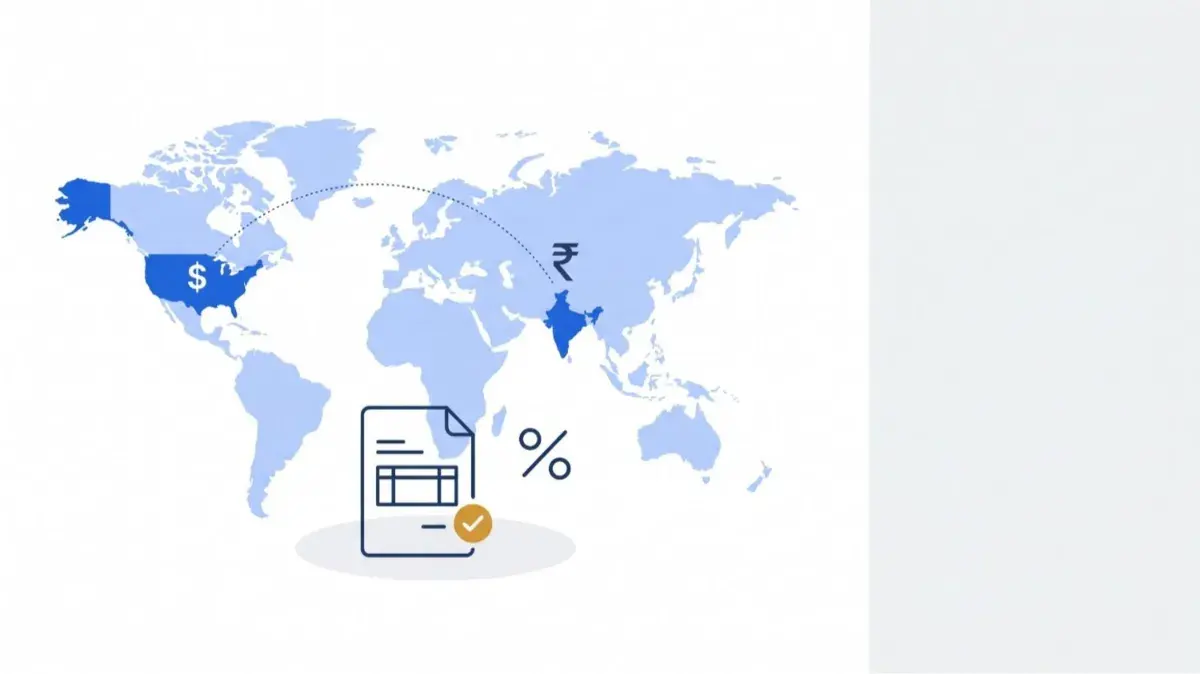
Foreign dividend tax in India 2026: the real 25% US withholding rate, DTAA relief, Form 67 filing, and Budget 2026's interest-deduction ban explained.
Jun 29, 2026
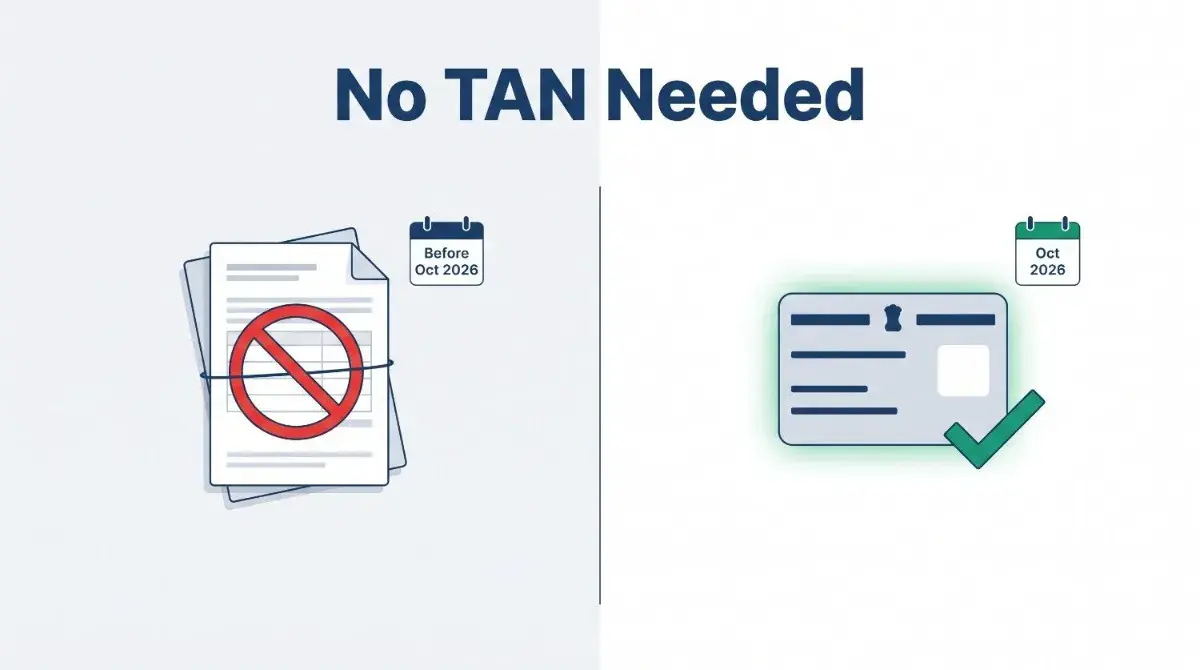
No TAN for NRI property purchase applies only from 1 October 2026, and only to resident individual and HUF buyers. Get the rates, forms, and dates you need.
Jul 25, 2026

Did you lose the SGB premature redemption tax exemption? Here's exactly who's affected, how much tax applies now, and how to check your own bonds.
Jul 24, 2026