

Salaried, running a business, or have capital gains? This 2026 guide shows exactly which ITR form to file — ITR-1 to ITR-4 — plus what changed for AY 2026-27.
If you only have salary income, up to two houses, and small equity gains, ITR-1 is enough for you. Once business income or larger capital gains enter the picture, you'll need ITR-2, ITR-3, or ITR-4 instead. The right choice depends entirely on the actual mix of income you had in FY 2025-26 (AY 2026-27), and getting it wrong can cost you more than just time.
This guide walks through exactly which ITR form to file based on your income sources, with real examples, a simple decision method, and answers to the questions people actually search for.
An Income Tax Return (ITR) is the form you use each year to tell the Income Tax Department what you earned, what tax you paid, and what refund (if any) is owed to you. There are seven main annual forms, ITR-1 through ITR-7, plus a separate ITR-B for search and seizure cases.
This guide covers Assessment Year 2026-27, which reports income earned between 1 April 2025 and 31 March 2026. Even though the new Income-tax Act, 2025 came into force from 1 April 2026, this year's filing season runs entirely on the older Income-tax Act, 1961, since it covers income from before the new Act began. The Income Tax Department has confirmed this directly: the 2025 Act only applies from Tax Year 2026-27 onward, meaning returns filed from 2027.
This guide is for | This guide is NOT for |
|---|---|
Resident individuals with salary, freelance or business income, or capital gains, trying to choose between ITR-1 and ITR-4 | Companies, LLPs, trusts, and firms, which file ITR-5, ITR-6, or ITR-7 |
Investors, F&O or intraday traders, freelancers, and salaried employees with side income | NRIs and RNORs who need residency-specific advice, and search or seizure cases needing ITR-B |
One thing worth flagging early: if you're a company director, hold unlisted shares, or own foreign assets, the simpler forms are off the table for you no matter how small your income is. We'll get to that below.
CBDT notified all the ITR forms for AY 2026-27 on 30 March 2026, with a corrigendum on 10 April 2026 that fixed a few drafting errors. Here's what actually decides which form applies to you.
Form | Who files it | Key limits (AY 2026-27) |
|---|---|---|
ITR-1 (Sahaj) | Resident individual with salary or pension income | Total income up to ₹50 lakh; up to 2 house properties (widened this year from just 1); LTCG under Section 112A up to ₹1.25 lakh with no carried-forward loss; agricultural income up to ₹5,000. No short-term capital gains, no business income, no crypto. |
ITR-2 | Individual or HUF with no business income | Any amount of capital gains, foreign assets, more than 2 properties, crypto (Schedule VDA), NRI/RNOR status, company directorship, or unlisted shares. |
ITR-3 | Individual or HUF with business or professional income | Covers F&O and intraday trading, partners in firms, salary combined with business income, and crypto treated as trading activity. |
ITR-4 (Sugam) | Resident individual, HUF, or firm (not LLP) opting for presumptive taxation | Section 44AD (turnover up to ₹2 crore, or ₹3 crore if at least 95% receipts are digital); Section 44ADA (up to ₹50 lakh, or ₹75 lakh if digital); Section 44AE. Total income capped at ₹50 lakh, with the same LTCG limit as ITR-1. |
Due dates matter just as much as eligibility. ITR-1 and ITR-2 (along with non-audit ITR-5) are due by 31 July 2026. ITR-3 and ITR-4 for non-audit cases now have a genuinely extended deadline of 31 August 2026 — this isn't a one-off relief, since the Finance Act 2026 permanently amended Section 139(1) to build in that extra month. Tax-audit cases under Section 44AB run until 31 October 2026.
On tax audit thresholds under Section 44AB: business turnover above ₹1 crore triggers an audit, but that limit rises to ₹10 crore if both your cash receipts and cash payments stay within 5% of the total. For professionals, the threshold is gross receipts above ₹50 lakh, with no separate digital-transaction relief. If you're not sure whether you cross this line, Toolisky's Section 44AB Tax Audit Applicability Checker can tell you in under a minute.
And if you're a freelancer trying to decide between Section 44AD and 44ADA, Toolisky's Section 44AD & 44ADA Presumptive Taxation Guide explains the lock-in rules that most guides skip over.
This is the question that trips up more people than anything else on this page: is your ₹80,000 stock market profit a capital gain, or is it business income?
CBDT Circular No. 6/2016 actually answers this, rather than leaving it vague. If you hold listed shares as investments, your gains stay as capital gains under ITR-2 no matter how often you trade, as long as you're consistent about it year after year. You can even run two separate "books" — one for investing, one for trading — each taxed under its own head.
There's no choice at all, though, for two specific categories. F&O trading always counts as non-speculative business income under Section 43(5)(d). Intraday equity trading always counts as speculative business income under Section 43(5). Both push you into ITR-3 regardless of how small the activity is, even if you're salaried and F&O is just a side hobby.
This distinction matters more this year because of a new disclosure rule. The revised ITR-3 now asks for separate turnover and profit figures for F&O and intraday trading, under "Schedule Part A-Trading Account." If you leave these fields blank, your return risks being treated as defective. F&O losses can be carried forward for 8 years as non-speculative business loss, while intraday speculative losses can only be carried forward for 4 years and can only be set off against other speculative gains.
Crypto and VDA income sits inside Schedule VDA, which lives in either ITR-2 or ITR-3 — never in ITR-1 or ITR-4. It's taxed at a flat 30% under Section 115BBH, and only the cost of acquisition can be deducted. There's no loss set-off and no carry-forward, and a 1% TDS under Section 194S applies to every transfer.
Example 1 (the common case): Suresh, a salaried techie in Bengaluru
Suresh earns ₹18,00,000 as gross salary. He lives in one flat and rents out a second one for ₹15,000 a month. In November 2025, he also redeemed some equity mutual funds.
Item | Amount |
|---|---|
Gross salary | ₹18,00,000 |
Rental income (₹1,80,000 minus 30% standard deduction) | ₹1,26,000 |
FD interest | ₹45,000 |
LTCG under Section 112A (within the ₹1.25 lakh cap, no carried-forward loss) | ₹98,000 |
Total income | ₹20,69,000 |
He's well under ₹50 lakh, he has two houses (now allowed under ITR-1), and his LTCG sits under the cap. Verdict: ITR-1, due 31 July 2026.
Example 2 (the edge case): Priya, salary plus weekend freelancing plus a stray trade
Priya earns ₹15,00,000 a year in marketing in Pune. On weekends, she freelances as a content writer and bills ₹6,00,000, all through bank transfer. She also tried her hand at intraday equity trading and booked ₹40,000 in short-term gains.
Content writing doesn't appear on the specified-professions list under Section 44AA, so it falls under Section 44AD as a business rather than Section 44ADA. At the 6% presumed profit rate on digital receipts, that works out to ₹36,000. But it's actually her ₹40,000 intraday STCG that decides her form — any short-term capital gain rules out both ITR-1 and ITR-4, regardless of what her business income looks like.
Her total income comes to roughly ₹15,76,000. Verdict: ITR-3, not ITR-4, because business income combined with any STCG can only fit inside ITR-3. This overlap of salary, business, and capital gains together is exactly the situation most guides miss, and it's more common than people realise.
You can check your own STCG or LTCG figures using Toolisky's Capital Gains Tax Calculator before deciding on a form.
Add up your total income. If it's above ₹50 lakh, ITR-1 and ITR-4 are already out — move straight to ITR-2 or ITR-3.
Check for business or professional income, including F&O and intraday trading. If you have any, you'll need ITR-3, or ITR-4 if it qualifies for presumptive taxation and nothing else disqualifies you.
Look at your capital gains. If your only gain is small LTCG under Section 112A (up to ₹1.25 lakh, no carried-forward loss), ITR-1 or ITR-4 stays open. Any STCG, or LTCG above the cap, means you need at least ITR-2.
Check for disqualifiers: company directorship, unlisted shares, foreign assets, NRI or RNOR status, or crypto income. Any single one of these rules out both ITR-1 and ITR-4.
When two forms seem to fit, file the higher-numbered one. ITR-2 covers everything ITR-1 does, and more. ITR-3 covers everything ITR-2 does, plus business income.
You filed the wrong form entirely. The department sends a defective-return notice under Section 139(9), giving you a window to refile correctly. If you miss that window, the return is treated as if it was never filed, and interest and penalty exposure kick back in from the original due date.
You missed your deadline. You can still file a belated return under Section 139(4) by 31 December 2026. You'll owe the Section 234F fee, and you'll lose the option to switch into the old tax regime for that year.
You filed correctly but found a mistake afterward. File a revised return under Section 139(5). The Finance Act 2026 pushed this window out to 31 March 2027, a genuine extra quarter compared to the old 31 December cutoff. Keep in mind that revision only fixes an already-filed, valid return — it can't rescue a wrong-form or missed-deadline situation.
Document | Digital copy okay? | Where to get it |
|---|---|---|
Form 16 (salary TDS certificate) | Yes | From your employer, usually by 15 June 2026 |
Form 26AS, AIS, and TIS | Yes | incometax.gov.in e-filing portal |
Capital gains statement | Yes | Your broker or mutual fund RTA |
F&O or intraday turnover statement | Yes | Your broker's trading account report |
Crypto or VDA transaction history | Yes | Exchange or wallet export |
Form 10-IEA (to opt out of the new regime, business income only) | Yes | Filed on the e-filing portal before the due date |
Late filing under Section 234F costs ₹5,000 if your total income exceeds ₹5 lakh, and ₹1,000 if it doesn't. It's nil if you're below the basic exemption limit. Section 234A adds 1% simple interest per month on any unpaid tax, calculated from the due date until you actually file.
If you file a defective return and ignore the Section 139(9) notice, you lose the right to carry forward business or capital losses for that year — permanently, not just for that return. That's the part people tend to underestimate until it costs them.
If your only capital gain is LTCG under Section 112A up to ₹1.25 lakh with no carried-forward loss, ITR-1 works fine. Any short-term capital gain, or LTCG above that cap, pushes you to ITR-2. Add business income on top of either, and you'll need ITR-3.
Yes, but only for LTCG under Section 112A specifically — listed equity shares or equity mutual funds where STT was paid. Any short-term gain, even ₹1, rules out ITR-1 completely, no matter how small your LTCG is.
ITR-3. F&O income and losses always count as non-speculative business income, never as capital gains, so ITR-2 simply can't hold them. Filing ITR-3 lets you report your salary, mutual fund LTCG or STCG, and the F&O carry-forward loss together, each in its own schedule.
Most freelancers in specified professions under Section 44ADA — law, medicine, engineering, and similar fields — use ITR-4, declaring 50% of receipts as income, up to ₹75 lakh if 95% or more of receipts are digital. Freelancers outside those specified professions typically fall under Section 44AD instead.
AdSense income, brand deals, and sponsorships count as business or professional income under Section 28. Most creators file ITR-3 with proper books, or ITR-4 under Section 44AD's presumptive scheme if turnover stays within ₹3 crore. Whether content creation formally qualifies as a "specified profession" for 44ADA is still debated among tax practitioners, so it's worth confirming with a CA before you opt for that route.
You'll receive a defective-return notice under Section 139(9), with a fixed window to refile correctly. If you ignore it, the return is treated as never filed, which brings back Section 234A interest and Section 234F penalties calculated from your original due date, not the notice date.
Yes, through a revised return under Section 139(5), by 31 March 2027 for AY 2026-27. But revision only corrects a return that was already valid to begin with. If you filed under a form you weren't eligible for in the first place, that's a defective return, and revision alone won't fix it.
NRIs cannot use ITR-1 or ITR-4 under any circumstances. If you have salary, house property, or capital gains income without business income, use ITR-2. If you have business or professional income in India, use ITR-3.
ITR-3, in almost every case. ITR-4 only works if the business income qualifies for presumptive taxation under Section 44AD, 44ADA, or 44AE, and no other disqualifier — like any short-term capital gain — applies. Salary alone never blocks ITR-4; a stray capital market trade often does.
LTCG under Section 112A up to ₹1.25 lakh, with no carried-forward loss, can sit inside ITR-1. Anything beyond that — a larger LTCG, any STCG, or debt fund gains taxed at slab rates — needs ITR-2, unless you also have business income, in which case it becomes ITR-3.
Schedule VDA sits inside ITR-2 if you're holding as an investment, or ITR-3 if it's more like trading-style business activity. It's never available in ITR-1 or ITR-4. The flat 30% tax under Section 115BBH applies either way, with no loss set-off allowed.
Yes, directly. CBDT Circular 6/2016 lets you treat listed-share gains as capital gains under ITR-2 if you're consistent about your approach, even with frequent trades. F&O and intraday trading, though, are always business income under Section 43(5) — there's no consistency argument that moves those into ITR-2.
Add up your total income, list every source you had in FY 2025-26, and run through the 5-step method above before you open the e-filing portal. If business income is in the mix, confirm your Section 44AB threshold using Toolisky's Section 44AB Tax Audit Applicability Checker, and check your capital gains figures on the Capital Gains Tax Calculator. For the official notification and live filing utilities, head to incometax.gov.in.
This article is for educational purposes only and does not constitute tax or legal advice. Please verify all figures against official sources before acting on them, and consult a qualified Chartered Accountant or legal professional before making compliance decisions. Toolisky is not affiliated with any government body.
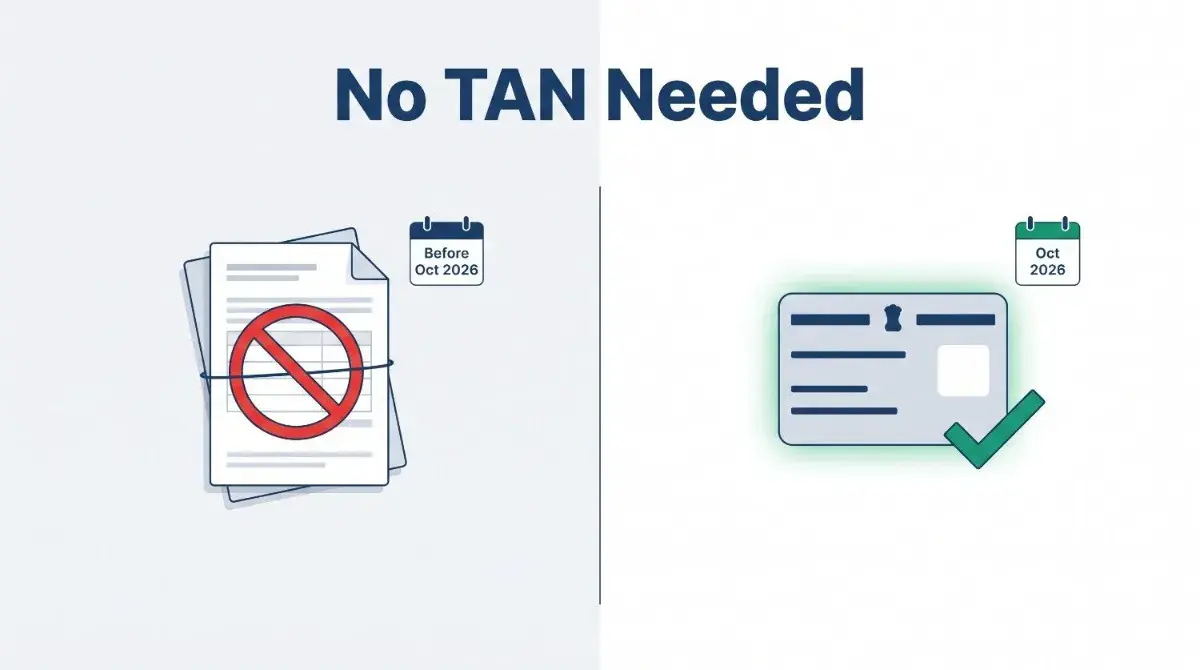
No TAN for NRI property purchase applies only from 1 October 2026, and only to resident individual and HUF buyers. Get the rates, forms, and dates you need.
Jul 25, 2026

Did you lose the SGB premature redemption tax exemption? Here's exactly who's affected, how much tax applies now, and how to check your own bonds.
Jul 24, 2026
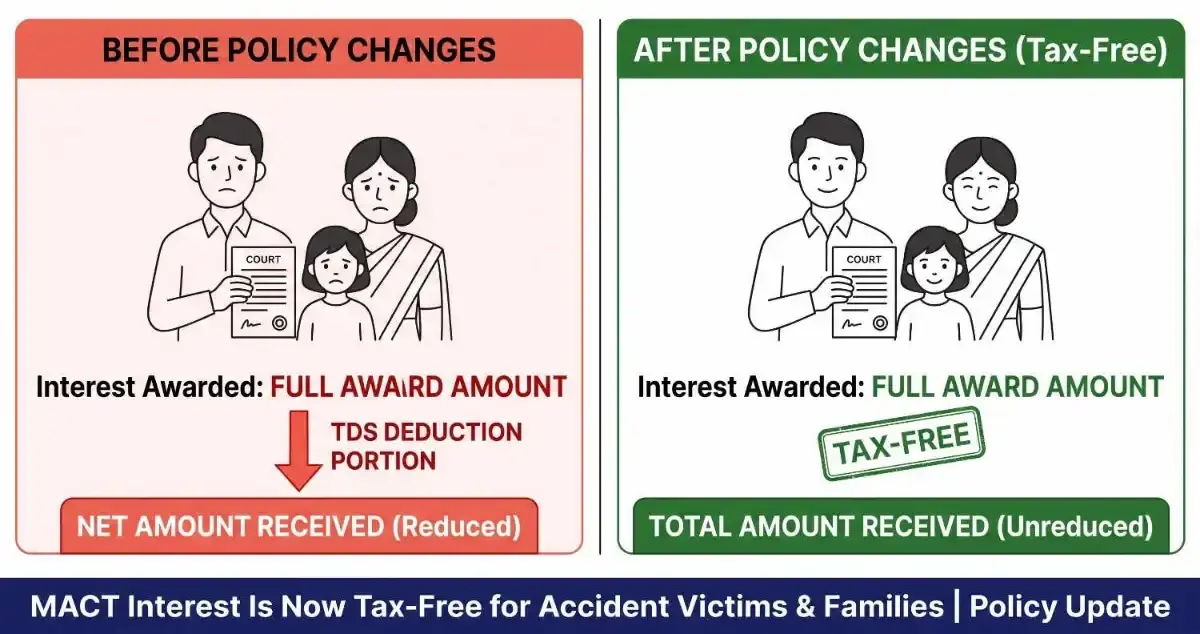
MACT interest income TDS exemption 2026 explained: who qualifies, old vs new Act rules, the FD interest trap, refund steps, and how to report it in your ITR.
Jul 24, 2026